- 24/12/2025
- Rohit Mishra
As a beauty brand, you can either outsource the manufacturing or manage it in-house. Outsourcing the manufacturing means collaborating with an external cosmetic manufacturer to manage your manufacturing needs.
When you outsource the manufacturing, you don’t require setting up huge factories or production plants. It also minimises your labour cost, and you get better access to proven product formulas. This reduces the risk of wastage and helps you launch the products quickly in the market.
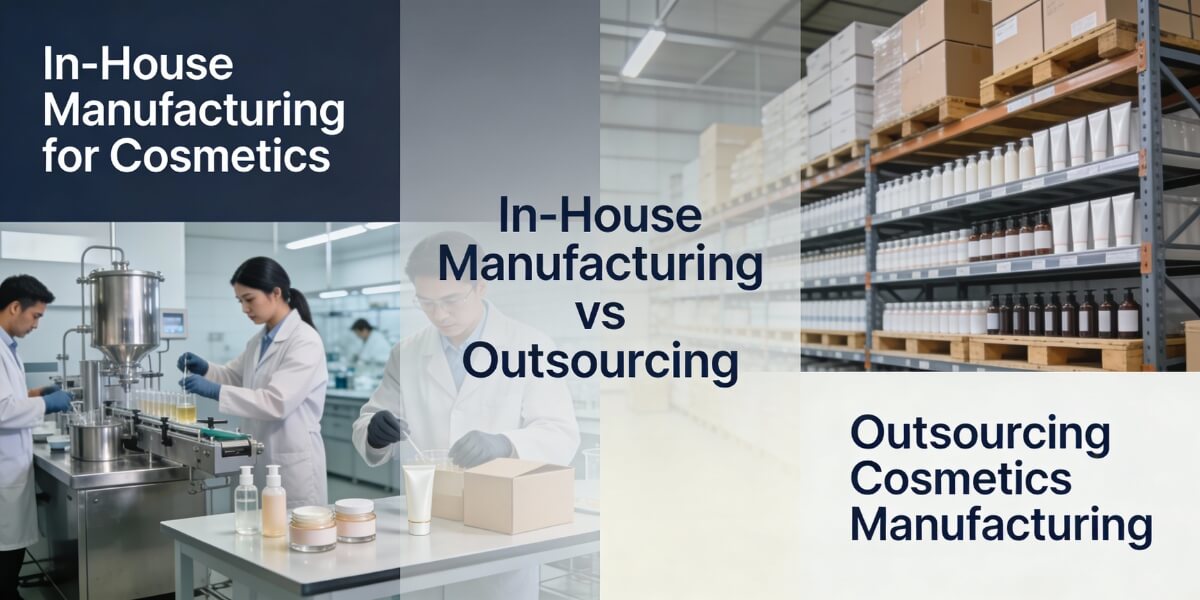
Now, let’s compare the pros and cons of in-house production vs outsourcing to understand which among them will suit your requirements.
What Is In‑House Manufacturing For Cosmetics?
In-house manufacturing means handling all the phases of manufacturing inside your factory premises. In this, you have to set up the manufacturing plant, buy machinery/equipment, and source ingredients by yourself. Figuring out quality checks and compliance is also a task for the in-house manufacturing teams.
Big beauty brands with sufficient funding can handle the costs associated with in-house manufacturing. Controlling the production pace and inspecting the quality of finished products minutely is possible when you choose in-house manufacturing over outsourcing.
Outsourcing Manufacturing: Meaning Explained
When you outsource manufacturing, you find a reputable external manufacturing company and assign the manufacturing work to it. The products are manufactured under your label.
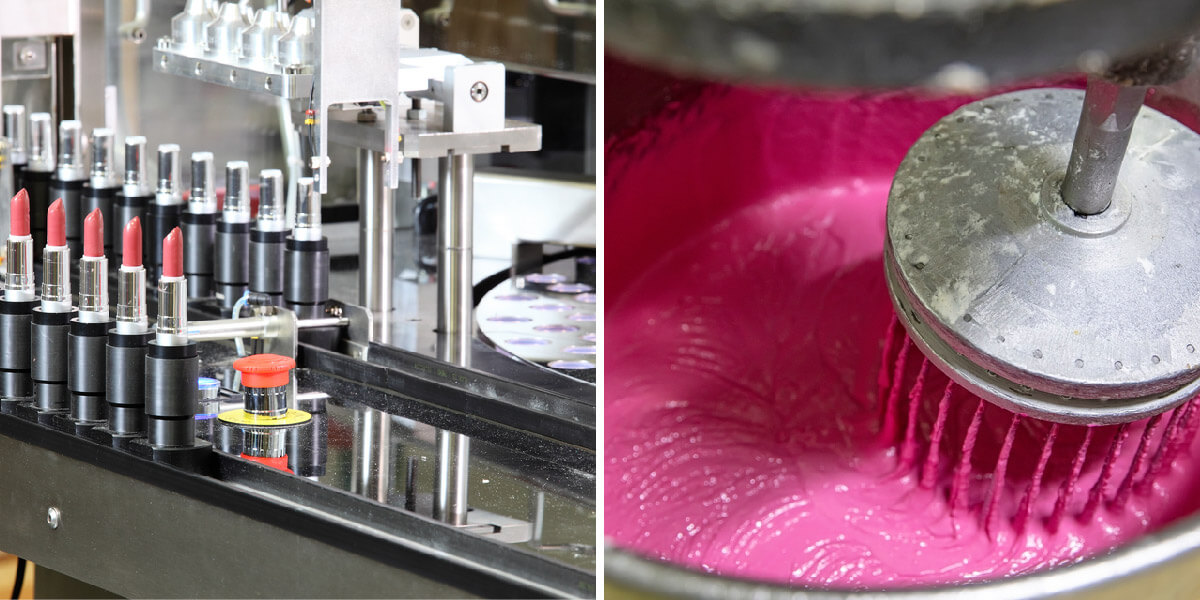
You can either choose a third party manufacturer, private label manufacturer, or contract manufacturing company as your external manufacturer. Each one of these methods comes with a different set of services and benefits.
Outsourcing is a common choice for startups, emerging regional brands, and D2C brands. Starting a brand with a low upfront investment with support from experts and faster launches is possible when you outsource manufacturing.
Understand Differences Between In‑House Manufacturing vs Outsourcing
The fundamental meaning and definitions of in-house manufacturing and outsourcing are explained above. So, let’s find the finer differences between in-house manufacturing vs outsourcing now:
Costs Overheads
- In-House: In-house manufacturing comes with high capital expenditure as you spend more to set up the factory, utilities, and machinery. An extra workforce is required to handle these processes, and it also involves the additional cost of training them.
- Outsourcing: Outsourcing involves only batch-wise payment and requires you to manage only a few cost overheads. So, it is definitely much more budget-friendly than in-house manufacturing.
Speed‑to‑Market & Innovation
- In-House: The initial manufacturing pace will be slow. As the systems gain experience, the manufacturing speed increases and brands become specialised in manufacturing their own products.
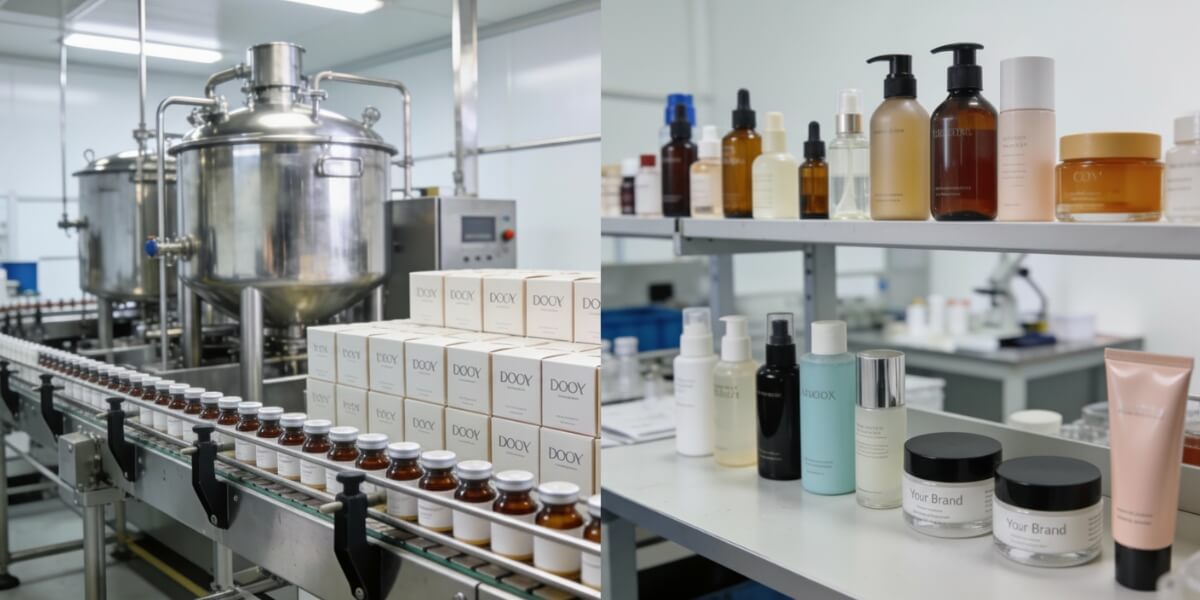
- Outsourcing: Outsourcing provides easy access to ready-made product lines and formulas. The product formulas are tested, which minimises the risks involved in manufacturing.
Risk, Quality & Compliance
- In-House: When you manage the production in-house, you have to handle all the risks involved with regulatory compliance and wastage.
- Outsourcing: The risks associated with manufacturing can be shared with the external manufacturer. If the manufacturing partner is experienced, it becomes quite easy for the brands.
When Does In‑House Manufacturing Make Sense?
When you compare in-house vs outsourcing manufacturing, you must also know when the in-house manufacturing makes sense. It only makes sense when your production volumes are high and stable. Your cash flow must be strong, and you must have enough funds to handle all the investments related to factory setup and operations.

The highly specialised processes have to be set up in the internal premises only. When you think of manufacturing in-house, you must have a clear, diverse, and multi-product roadmap for the future.
Why Does Outsourcing Suit Most Growing Beauty Brands?
Outsourcing helps in the starting stages, as it lowers the financial risk associated with in-house manufacturing. It becomes feasible for brands, as they can test, launch, and experiment with different products in the market. The production can be managed as the demand increases or decreases with time.
As the manufacturing burden is shared with the partner, the founders get time to improve their marketing, branding, and distribution strategies. Due to these reasons, most growing beauty and cosmetics brands prefer outsourcing over in-house manufacturing.
How Does Bo International Support Outsourced Manufacturing?
At Bo International, we offer end-to-end manufacturing support to skincare, haircare, bodycare, and perfume brands. With extensive research and development facilities, we offer greater customisation options and also provide packaging and required documentation to our clients.

We have set up certified facilities with scalable production for both domestic and international brands. We take pride in behaving like an external in-house production house for our clientele. This has earned us a great reputation in both regional and global markets.
FAQs – In House Production vs Outsourcing For Cosmetics Brand
Q1: Should I Manufacture Cosmetics In-House or Outsource It?
A1: If you are planning to start a big brand with high production volumes and stable product lines, it is better to set up an in-house manufacturing process. If you are a startup or growing brand, collaborate with an external manufacturer and lower the risks associated with in-house manufacturing. With faster launches and saved time, you can focus more on growing your brand.
Q2: When Should I Shift From Outsourcing Manufacturing To In-House Manufacturing?
A2: Once you’ve managed consistent sales for years and introduced your products in different markets, you can think of managing the production in-house. Also, you must have the required capital and technical leadership to manage all the in-house manufacturing processes by then.
Q3: What Are Key Benefits of Outsourcing Manufacturing For Cosmetics Brands?
A3: When you outsource the manufacturing, you don’t require setting up a manufacturing plant. It also saves your investment on machinery and workforce. Your operational complexity is drastically reduced, and you can also avail yourself of the option of flexible production as per the increasing and decreasing product demand in the market.
Q4: What Are Risks Associated With In-House Manufacturing vs Outsourcing?
A4: The risks associated with compliance, finances, and operations have to be managed by you when you choose in-house manufacturing. With outsourcing, you become more reliant on your manufacturing partner. Your operational and financial burden is significantly reduced, but your timelines are entirely dependent on your partner.
Q5: How To Choose Between Manufacturing In-House vs Outsourcing?
A5: Analyse your funding, sales scale, and forecast whether the demand will be stable in the future or not. Determine if you need more control or better flexibility at the moment. Outsourcing is a safer bet for startups and growing brands.