- 21/11/2026
- Rohit Mishra
Product sampling is an important safety and quality checkpoint when working with an overseas manufacturer for beauty and personal care companies, because it bridges the gap between digital specs and actual performance. Before placing large manufacturing orders, brands need to examine physical cosmetic product samples to prevent costly mistakes, production issues and regulatory compliance problems. It’s a good idea to get a sample and try it out before you buy or start mass-producing a product.
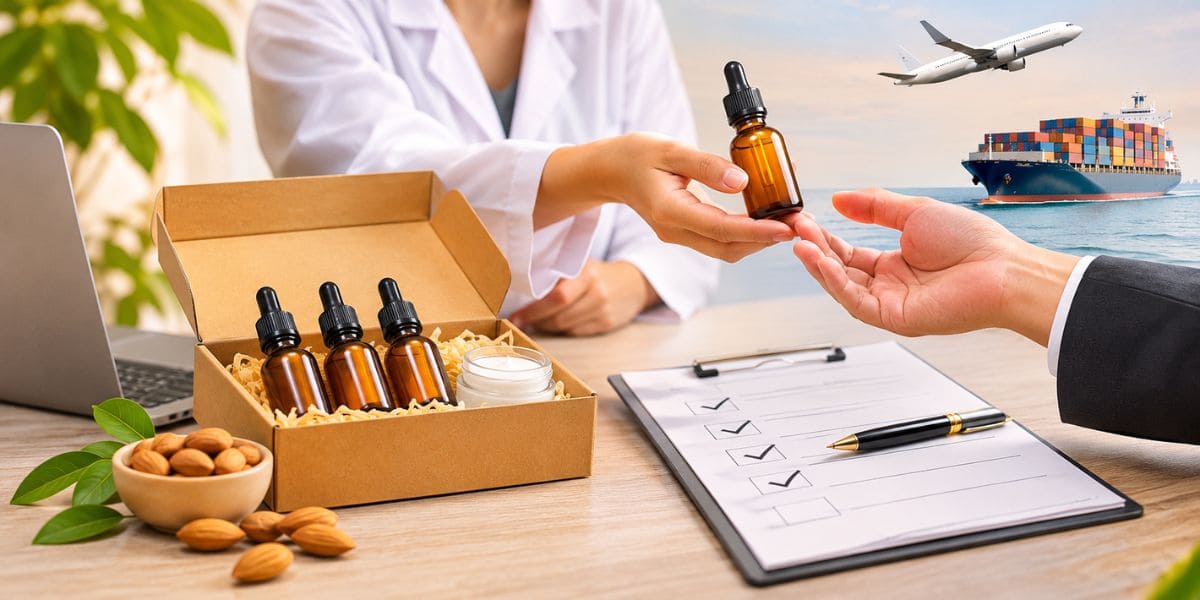
It bridges the gap between digital descriptions and the physical world, allowing customers and quality assurance groups to measure critical attributes in real-world conditions. When working with a manufacturer overseas, additional coordination is needed for cosmetic product sampling due to the geographical distance, communication challenges and complicated logistics. This article on product sampling with an overseas manufacturer touches on everything from requesting samples to final approval and bulk production.
Why Product Sampling Matters in Cosmetic Manufacturing?
Product sampling plays a crucial role in cosmetic manufacturing by allowing brands to evaluate product quality, test formulation stability, identify potential risks, and refine product performance before large-scale production. It helps ensure that every product meets safety standards, maintains consistency, and delivers the desired experience to consumers.
Evaluate Product Quality Before Bulk Production
Cosmetics companies use product samples to test their cosmetics before committing to mass production. The team can smell, feel, apply, skin test and assess the thickness of the product in small doses. Feedback is used to improve the product to suit consumer preferences and to provide a consistent experience. The trials also ensure the formulation meets the quality expectations and is suitable for the intended market.
Reduce Formulation and Manufacturing Risks
Sampling can help lower production risks by identifying early signs of instability, pH shifts, ingredient incompatibility, contamination, and packaging problems. First, manufacturers can test microbiological quality, chemical interactions and raw materials prior to scale-up. This guarantees that even larger production runs meet the required standards of safety, performance and consistency, avoiding expensive manufacturing mistakes and improving GMP compliance.
What Types of Cosmetic Product Samples Can Brands Request?
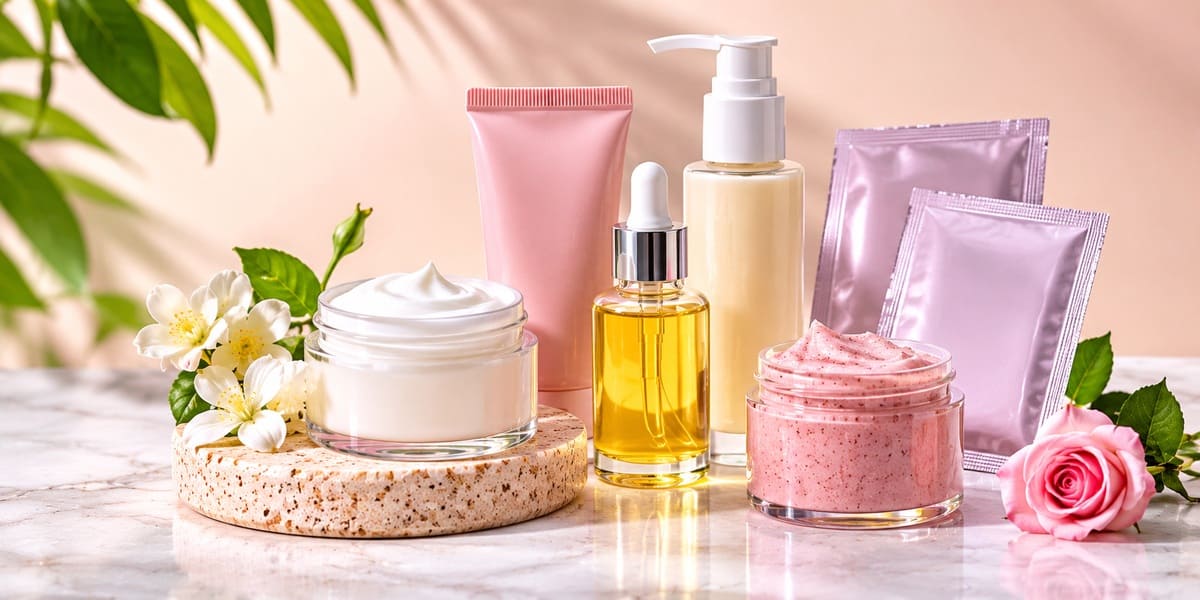
Existing Formulation Samples
Existing cosmetic formulation samples allow brands to explore ready-made skincare, makeup, haircare, and body care products. These include moisturisers, serums, cleansers, sunscreens, lip balms, shampoos, conditioners, and lotions to evaluate texture, fragrance, appearance, and performance.
Custom Formulation Samples
They work with the manufacturers to develop samples of formulations that can only be used by their brand. Brands are free to select ingredients, active concentrations, textures, scents, colors, packaging compatibility and product performance. These prototypes are used to check that the custom cosmetic formulation is in accordance with the intended product concept before proceeding with commercialisation and upscaling.
Reference Samples for Product Matching
Brands can indicate to manufacturers what they expect by showing examples of current products, samples from competitors or reference formulations. These references enable research and development teams to create samples that are close to the brand’s vision, helping them to understand the texture, consistency, fragrance, appearance and performance they are looking for.
Step 1 — Share Your Product Requirements with the Overseas Manufacturer
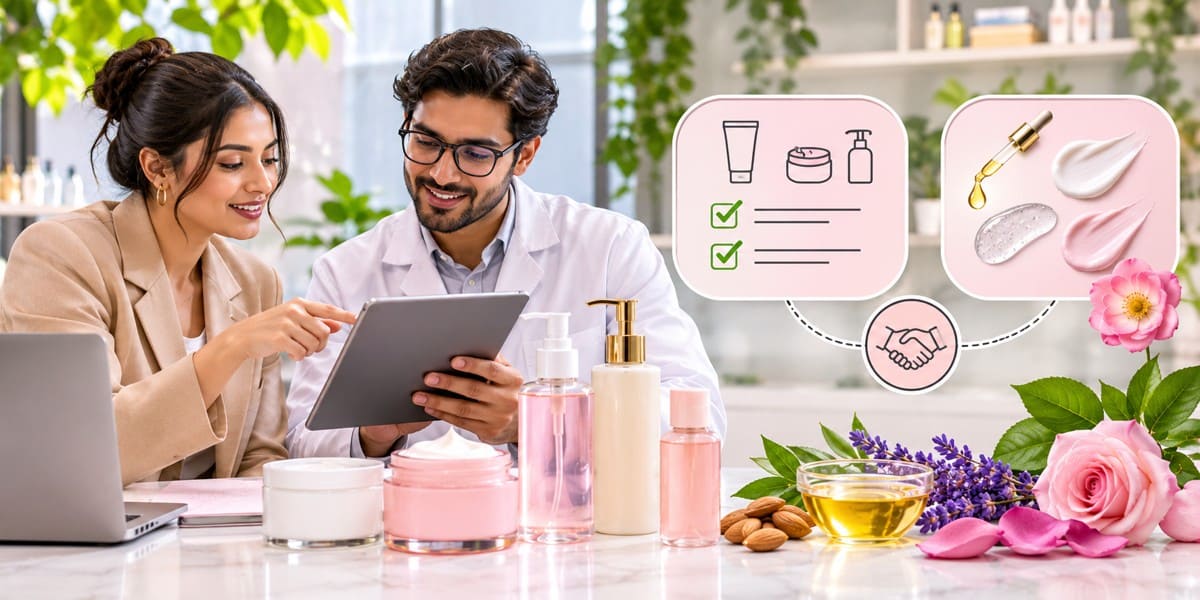
Clearly communicating your product requirements helps overseas manufacturers understand your brand vision, target audience, formulation preferences, ingredient choices, packaging needs, and production expectations. This ensures smoother product development and reduces unnecessary revisions.
Define Your Product Category and Requirements
If it is personal care, hair care or skin care, start with a detailed cosmetic product development brief outlining the category. Describe the product’s function, who it is for, and where it will be sold. What skin or cosmetic problems does it solve? How does the product typically work? Are there any relevant regulations? What are the marketing claims? What is the desired packaging? What is the desired purchase quantity? This way, you can better communicate your brand goals and financial projections to manufacturers.
Share Ingredient, Texture and Fragrance Preferences
Clearly state your preferred ingredients, active substances, and formulation requirements to guide the development of the product. Give the weight, color, fragrance direction, absorbency and after-feel you’re looking for. Sharing competitor products or using them as a reference can be helpful in setting expectations. When you express your preferences to formulators, they can evaluate the feasibility of a formulation, choose the appropriate raw materials, and create samples that require less revision and comply with your brand’s quality requirements.
Step 2 — Understand the Product Formulation and Sampling Process
Understanding the formulation and sampling process helps brands evaluate existing formulas, develop customized products, and test initial samples to ensure the desired quality, performance, stability, and consistency before bulk manufacturing.
Review Existing Formulations
Manufacturers look at the brand’s product idea, the target consumers, market trends and performance expectations before recommending a good base formulation from the existing ones. These formulations can be tailored for texture, color, viscosity, fragrance and active ingredients. This approach provides a realistic starting point for product sampling, speeds up formulation and facilitates development.
Develop Custom Formulations
Formulation specialists create specific recipes using carefully selected raw materials, functional ingredients, preservatives and active compounds when the existing bases are not suitable for specific needs. Cosmetics lab chemists often work with small batch sizes (100-200g) to adjust things like pH, viscosity and oil-to-water ratios. There are several rounds of reformulation after initial stability tests and sensory evaluations and feedback on the brand. The total time it takes to sample a product can vary based on how many and how complex the ingredients are.
Prepare Initial Product Samples
Once the formulation is perfected, the manufacturer makes initial batches for testing texture, spreadability, absorption, colour, scent and how well the product generally works. Approved prototypes are tested for stability and quality to ensure they don’t delaminate, discolor or degrade. Laboratory batches of 1-2 kg and subsequent 20-40 kg pilot batches may be carried out to check the consistency of the production. First samples are test samples only and are not final approval to go to mass production.
Step 3 — Shipping Cosmetic Product Samples from Overseas Manufacturers
Shipping cosmetic samples from overseas manufacturers requires choosing the right shipping method, ensuring secure packaging, and understanding international customs regulations. Proper documentation and compliance with import requirements help prevent delays, damage, and unexpected shipping costs.
Understand International Sample Shipping
Cosmetics are sent using international couriers like DHL Express or air freight, depending on the urgency and quantity of the samples. Express shipping usually takes 1- 5 days, and you can track your package. Samples should be packed well to prevent damage from temperature and humidity changes, leakage, or rough handling. Serums, balms and delicate emulsions may require insulated or cold pack packaging to protect from heat and light. Check the shipping rates and estimated delivery dates prior to purchase.
Check Customs and Import Requirements
If the formulation contains alcohol, is aerosol, has an SPF or is medicated, please review the destination country’s import regulations, ingredient restrictions and special handling requirements before shipping. Create packing lists, SDSs, air way bills, packing lists, and commercial or pro forma invoices. Value each sample at a reasonable customs value and mark each sample “Not for Resale”. Make sure you understand all the fees, taxes, clearance requirements, labeling specifications and regulatory approvals that may be required to avoid customs delays or rejection of your shipment.
Step 4 — Evaluate the Samples Before Giving Feedback
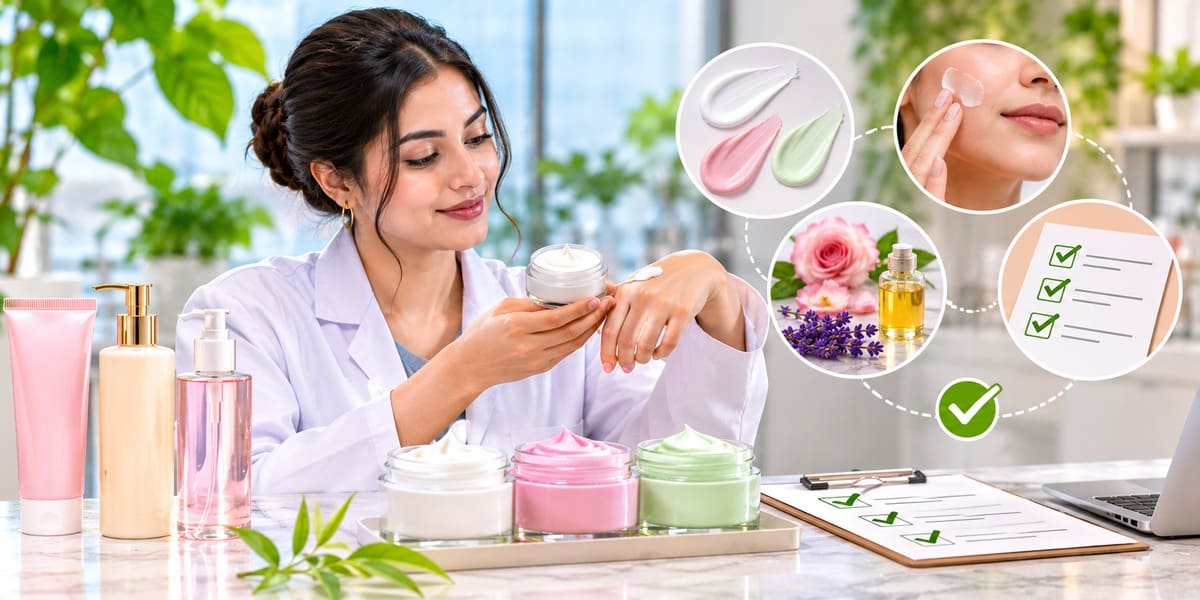
Evaluating samples helps ensure the product meets your expectations for texture, colour, fragrance, performance, safety, and packaging. Compare each sample with your original requirements and provide clear feedback to the manufacturer for necessary improvements before final approval.
Check Texture, Colour, and Fragrance
Learn how the samples smell, age, colour and feel. Packaging should be intact and protected during transportation to avoid contamination, leakage, or damage. Find all the information you need on international shipping, including estimated delivery times, shipping costs, tracking options, and courier services.
Evaluate Product Application and Performance
Test absorption, spreadability, residue and layering compatibility with other skincare products. Verify active ingredients, INCI compliance, stability, shelf life and microbiological safety. Check whether certain ingredients or formulations require special handling, shipping restrictions or specific customs documentation and import approvals.
Compare Samples with Your Original Requirements
Compare samples to product brief specifications, including claims, performance, packaging and labeling. Review supplier files, safety documents and batch history. Make sure all import and regulatory requirements are fulfilled. Provide detailed feedback to producers on areas for improvement.
Step 5 — Request Formulation Changes and Revised Samples
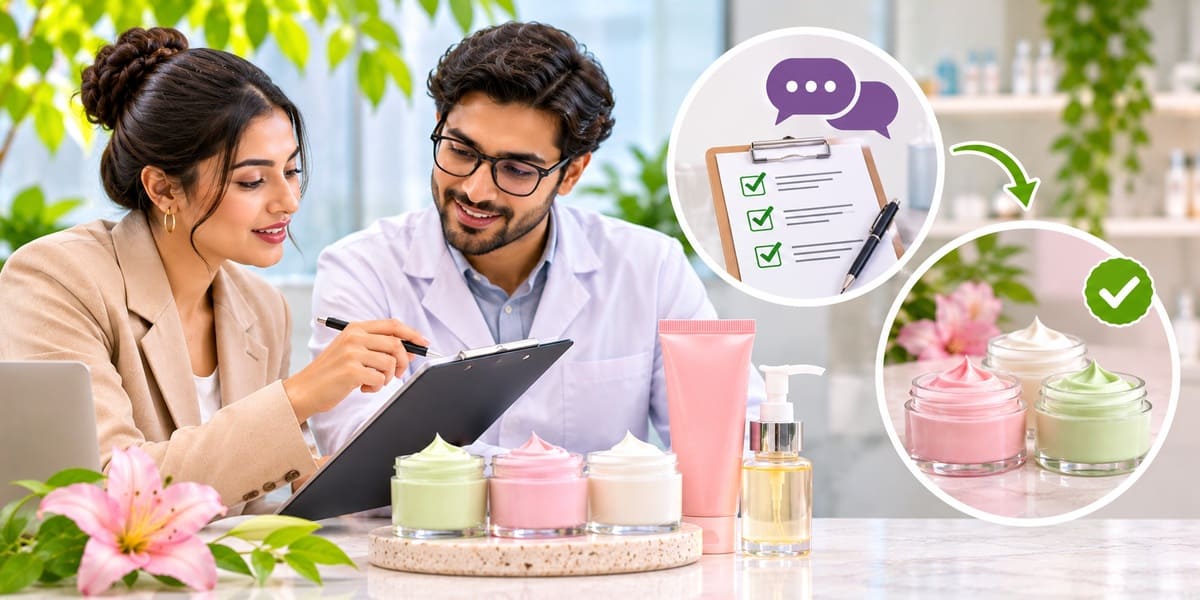
Share clear feedback with the manufacturer about the required formulation changes, including texture, colour, fragrance, and performance. Review revised samples carefully to ensure they meet your product specifications and quality standards before giving final approval.
Communicate Clear Feedback to the Manufacturer
Provide the manufacturer with specific and structured feedback on the sample’s appearance, colour, fragrance, texture, absorption and performance. Complete Formulation Change Requests (FCRs) as well as R&D feedback briefs to document required changes. Be clear from the beginning about packaging preferences, quality levels and regulatory guidelines so there is less back-and-forth. Major changes in the formulation may require further development and testing effort, which may have an impact on the project budget and schedule.
Review Revised Samples Before Finalization
Evaluate each of the updated samples for conformance to the specifications for performance, sensory, stability and compatibility with packaging and formulation. If you think you’ll need more rounds of sampling, ask for it. The following equation can be verified on a smaller scale. Ensure that it meets all quality and regulatory requirements before giving it final approval. Fast feedback and straightforward communication reduce costly rework and speed product launch.
Step 6 — Testing and Quality Checks Before Sample Approval
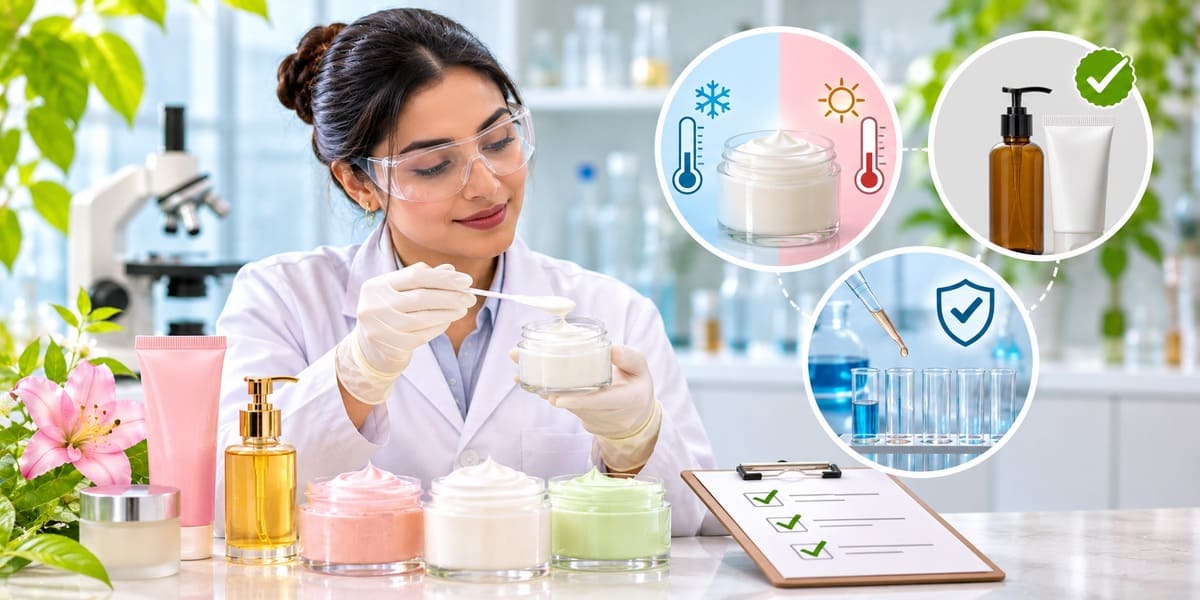
Testing and quality checks ensure that cosmetic samples meet required standards for stability, packaging compatibility, safety, and performance. These evaluations help identify potential issues, verify regulatory compliance, and ensure the product is ready for final approval and bulk production.
Review Product Stability and Packaging Compatibility
Product stability testing is performed to determine whether a cosmetic formulation will maintain texture, pH, viscosity and performance through its shelf life. Packaging compatibility testing is conducted to ensure that containers do not react with the product, leak, or otherwise affect product quality. These checks help to detect formulation changes due to temperature, light, humidity or storage conditions to ensure the product keeps its quality and durability during transportation and use.
Understand Relevant Quality and Safety Testing
Quality and safety testing includes assessments in microbiology, pH, patch testing, toxicology, and clinical environments. Such tests can help shed light on possible allergens, pollutants, irritants and dangerous substances. Products are regularly evaluated to ensure that they remain safe, effective and compliant with all applicable regulations. Claims of hypoallergenicity, non-comedogenicity and long-lasting efficacy are supported by instrumental and clinical evaluations.
Step 7 — Finalize the Sample and Approve Bulk Manufacturing
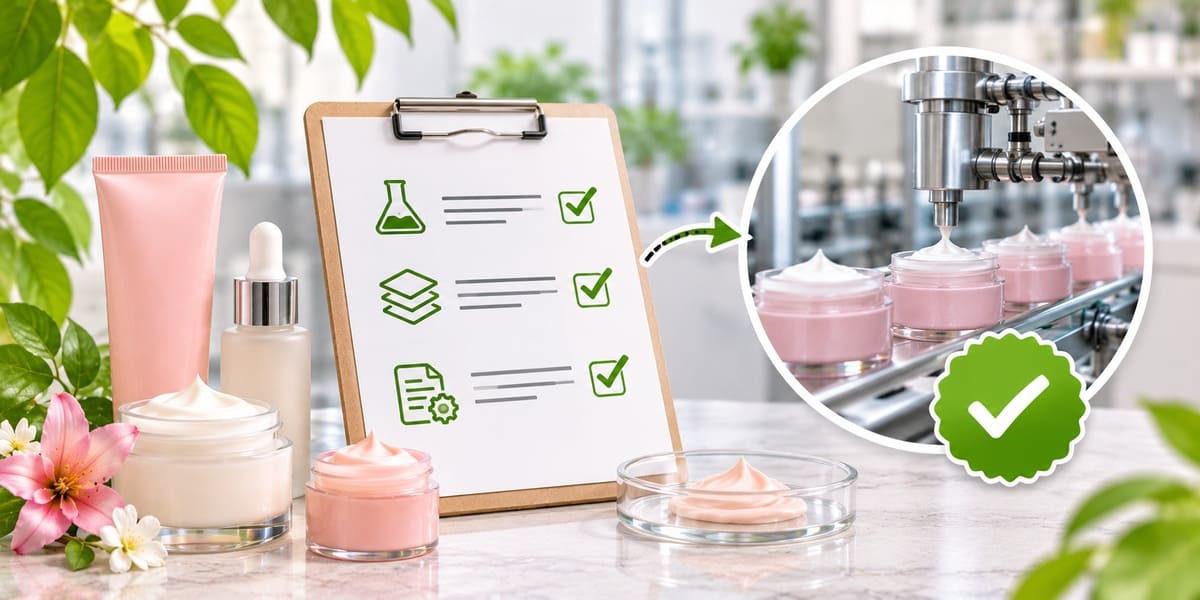
Finalizing the approved sample involves confirming the formulation, ingredients, packaging, labeling, and regulatory documents. Once everything meets your requirements, the manufacturer can proceed with pilot testing and bulk production while maintaining consistent product quality.
Confirm the Final Formulation and Product Specifications
Once you have your sample approved, finalize the product’s ingredients, texture, scent and formulation. Review all regulatory documents, including CPSR—microbiological safety and compatibility with package. Finalize ingredient lists, product claims, usage instructions and label artwork for consistency and code compliance.
Move Forward with Bulk Production
After all final approvals have been received, a pilot batch must be run to ensure that all filling, manufacturing and quality standards have been met. Validation may be followed by bulk production, packaging and quality control testing. The approved sample and agreed specifications can be used as a reference to achieve product quality consistency, regulatory compliance and trouble-free commercial manufacturing.
Common Mistakes to Avoid When Ordering Cosmetic Product Samples
- Sharing Incomplete Requirements: Clearly communicate product specifications, ingredients, packaging preferences, target audience, and performance expectations.
- Expecting the First Sample to Be Final: Allow multiple formulation rounds to refine texture, fragrance, appearance, and performance.
- Providing Vague Feedback: Give specific, actionable feedback to help manufacturers make accurate improvements.
- Ignoring Stability and Packaging Compatibility: Test shelf stability, packaging materials, dispensing systems, and potential formula interactions.
- Overlooking International Shipping and Customs: Confirm shipping costs, documentation, import duties, and customs requirements beforehand.
- Approving Without Specification Reviews: Verify samples against agreed quality, formulation, and packaging specifications.
- Starting Bulk Production Too Early: Complete stability testing, quality checks, regulatory reviews, and final approvals before mass production.
How to Choose the Right Overseas Cosmetic Manufacturer for Product Sampling?
Check Formulation and Research Capabilities
Choose an overseas cosmetic manufacturer that has experienced formulation specialists offering both existing and custom formulation options. Assess their R&D expertise, quality control facilities and ability to meet product specifications. BO International provides private-label, contract manufacturing and custom formulation services.
Evaluate Sample Development and Testing Support
Request product samples just before bulk production to assess texture, fragrance, colour and performance. Select a manufacturer that not only offers sample revisions, stability testing and compatibility assessments but also quality checks to ensure consistent product quality.
Understand Communication, Timelines and Manufacturing Services
Prioritise manufacturers that not only provide transparent communication and realistic production timelines but also international shipping support. Check if they provide end-to-end services, which can include formulation, manufacturing, filling, and packaging, to simplify operations and ensure smoother product launches.
Conclusion
In the case of an international cosmetics manufacturer, brands should always conduct product sampling before moving on to mass production. This allows them to assess the quality, the performance of the formulation and the safety of the product. The final product must meet expectations, so it’s important to review formulations, evaluate samples, provide structured feedback and carry out any necessary stability, compatibility and quality tests.
Also, ensure all product specs are approved before you get into production to avoid costly mistakes and delays. Having a reliable manufacturing partner makes it easier for emerging beauty brands to develop and sample products. Explore cosmetic manufacturing, private label cosmetic samples, and product development services from BO International, and let us make your beauty ideas a reality.
FAQs
What are cosmetic product samples?
The purpose of cosmetic product samples is to evaluate the appearance, texture, aroma, consistency and other aspects of the product before it is manufactured in large quantities. These samples are small volumes of formulations that are made for brands.
Can I request cosmetic product samples from an overseas manufacturer?
By organizing communication, providing precise paperwork, and adhering to a tiered workflow from the initial inquiry to the sample approval, brands have the ability to request cosmetic samples from manufacturers who are abroad in an effective manner.
How many sample revisions are usually required before approval?
The intricacy of the formulation, the expectations of the brand, and the input that was collected throughout the development phase all play a role in determining the number of sample changes that are required for approval.
How long does it take to receive cosmetic product samples from an overseas manufacturer?
Cosmetic product sample delivery times depend on formulation development, sample preparation, international shipping, customs clearance and product complexity, etc. Understanding each stage’s impact on scheduling helps teams establish realistic buffers and prevent bottlenecks.
Can bulk cosmetic production begin before sample approval?
Finalizing product formulation, specifications, and testing before bulk manufacturing is essential to ensure quality, avoid costly errors, and ensure regulatory compliance, safeguarding investments before significant production costs are incurred.