- 25/11/2026
- Rohit Mishra
If you are an essential oil importer in the US from India, you need to negotiate customs fees and comply with regulations to avoid legal complications and expensive misclassifications. The 10-digit HTS code is essential to classify imports, establish tariff rates, and estimate other expenses. Tariff rates, or customs duties, are fees that the government collects from imported goods. But that’s not just a basic tariff; there are additional costs involved in customs clearance that add to the import costs.
In this post, we will cover the steps for efficient customs clearance, including HTS codes, customs duty classification, calculation methods and more. It’s important to know these components to be able to import successfully.
Understanding US Customs Duty on Essential Oils from India
Customs duty is a tax imposed by the government on goods imported and exported across international borders. Customs tariffs and procedures upon entry into the United States are determined by the Harmonized Tariff Schedule (HTS) classification of essential oils, the country of origin, and the value of the shipment. The final import fee is determined by the classification, country of origin and customs value of the product.
First, customs duties are calculated based on the Harmonized System (HS) classification and the basic value. Some trade policy or market imbalances will need to be corrected with additional tariffs. Importers should check the latest US tariff schedule before placing orders.
What Are HTS Codes for Essential Oils?
Imported goods are classified according to the Harmonized Tariff Schedule of the United States (HTSUS), along with the duty rates and statistical categories that accompany them. It uses a 10-digit code that builds on the global 6-digit HS code, specifying US tariffs and trade remedies. Section 3301 of Chapter 33 provides for essential oils and similar products. The customs tariffs, the regulatory compliance and the safety standards should be based on the functional name of the product and not on the commercial name to avoid confusion and gaps that could endanger safety.
Essential Oil HTS Codes: Product-Wise Classification
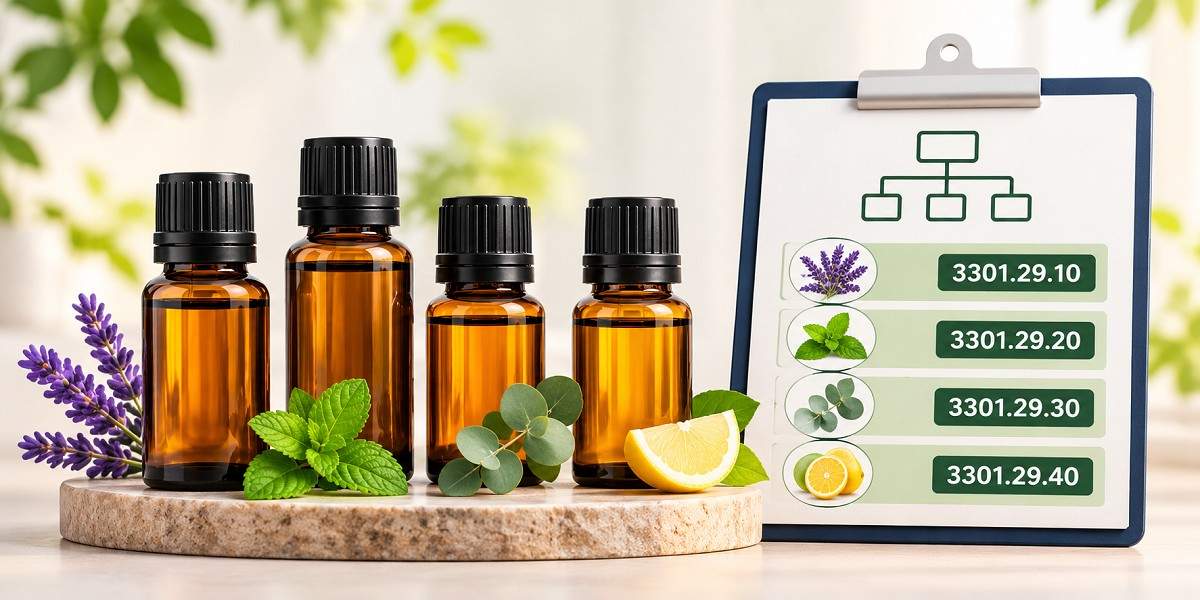
Essential oils (including citrus oils, and oils from other plants), resinoids, oleoresins, aromatic distillates and aromatic oils are generally classified under Heading 3301 of the US Harmonized Tariff Schedule (HTSUS). Examples of non-citrus oils are those of peppermint, other mints, eucalyptus, lavender, and cloves (3301.24-3301.29). Citrus oils (3301.12-3301.19) are those from citrus fruits such as lemon and orange. Resinoids such as frankincense, myrrh, and benzoin fall under 3301.30.
Other products, including extracted oleoresins, enfleurage concentrates, terpenic byproducts, and hydrosols, generally fall under 3301.90. Blended aromatic mixtures may be classified under Heading 3302, while finished cosmetic and toiletry preparations fall under Headings 3303–3307. Always verify the final 10-digit classification against the latest HTSUS, and consult a certified customs broker before filing.
1. Citrus Essential Oils
The essential oils of citrus fruits, such as oranges, lemons, grapefruits, bergamot, and limes, are classified under HTS heading 3301 and have distinct US HTS codes for classification and import/export purposes.
2. Mint Essential Oils
Essential oils of mint (peppermint, etc.) are classified under HS heading 3301. Specific subheadings distinguish peppermint, spearmint, water-mint, cornmint, and other mint varieties.
3. Eucalyptus, Lavender, and Other Essential Oils
Sandalwood, eucalyptus and lavender essential oils fall under HTS Heading 3301.29 of the US Harmonized Tariff Schedule. This classification depends on the particular oil and any tariff restrictions that apply.
4. Essential Oil Blends and Diluted Oils
To ensure safety and compliance with regulations such as the HTS, blends, fragrance mixtures, and oils diluted in carrier oils must be classified separately. This is because their chemical identity, risk profile and intended use are different from pure essential oils.
How to Check the Current US Import Duty Rate
- Check the official USITC website and search for the Harmonized Tariff Schedule (HTS) for the right tariff classification.
- To be sure you are using the correct 10-digit HTS code, look up your product in the tariff description and read it cover to cover.
- Check the columns for general and special duties, extra charges, surcharges for specific countries and trade measures that apply.
- The major essential oil import duty rates in the USA are subject to change, so it is important to check the current rate for the expected import date.
- Consult a licensed customs broker if the product classification, country of origin, or tariff applicability is unclear to avoid incorrect duty calculations.
How to Calculate Customs Duty on Essential Oils
Using US Customs and Border Protection’s basic valuation, classification and fee stages, you can estimate essential oils coming into the US and calculate customs duty and import expenses. All foreign traders must be able to ascertain the customs value of a shipment. It sets the official monetary value of goods being imported or exported under regulatory and legal requirements.
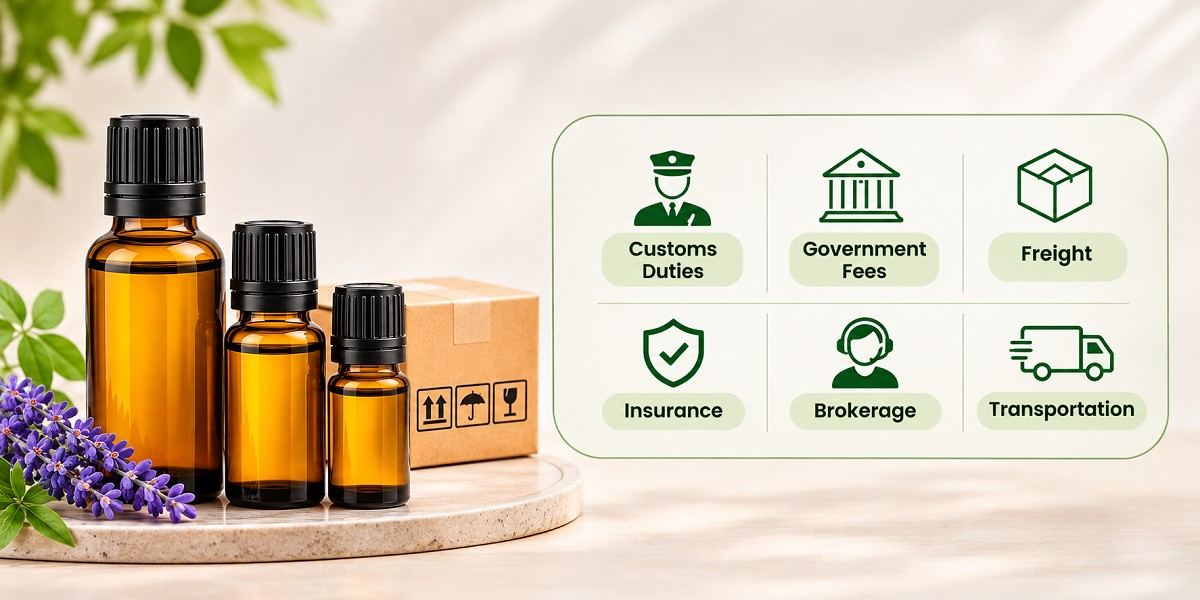
A simple method of calculating essential oil customs duty is to multiply the customs value by the relevant ad valorem duty rate. Specific duties, supplementary tariffs, and valuation laws may affect the computation. The ultimate landing cost may include customs duties, appropriate government fees, freight, insurance, brokerage and transportation. Any hypothetical charge should be labeled as such, not as an official tariff.
Additional Costs When Importing Essential Oils into the USA
Importing essential oils into the USA involves several additional costs beyond the product and freight price. These may include Merchandise Processing Fees (MPF), Harbor Maintenance Fees (HMF) for qualifying ocean shipments, customs broker charges, customs bonds and carrier surcharges. Importers must also account for international freight, cargo insurance, storage, and inland transportation.
There may be additional tariffs, customs duties, or fees that are specific to the shipment that are applicable depending on the country of origin and the regulations that are in effect. Overall, these costs vary according to the shipping method, shipment value, entry type and prevailing US customs and import requirements.
Documents Required to Import Essential Oils from India
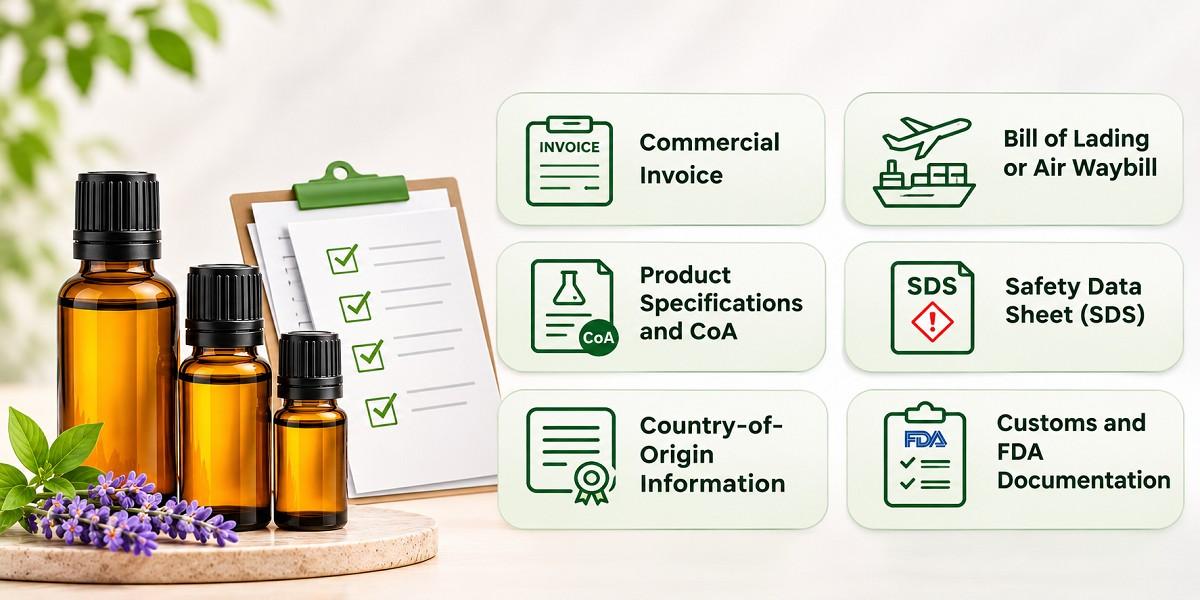
Essential oils imported into the US from India must be accompanied with commercial, shipping, quality and regulatory documentation. Some important papers:
- Commercial Invoice: Details the buyer, seller, product description, quantity, and value.
- Packing List: Specifies package contents, weights, and measurements.
- Bill of Lading or Air Waybill: Confirms cargo receipt and transportation.
- Product Specifications and CoA: Provide product details and quality test results, where available or required.
- Safety Data Sheet (SDS): Outlines handling and safety requirements, where relevant.
- Country-of-Origin Information: Confirms Indian product origin.
- Customs and FDA Documentation: Includes applicable declarations and FDA-related documents based on product type and intended use.
Since each product has its own unique set of regulations, you must check these requirements prior to shipment.
Step-by-Step Process for Importing Essential Oils from India to the USA
India-to-US Essential Oil Import Process:
- Do your research before buying an essential oil: ingredients, quality, use, and vendor.
- Find the US tariff rate for essential oils, and make sure you have the correct HTS code for essential oils.
- Estimate the product, freight, insurance, customs duties, and any other additional charges to arrive at the landed cost.
- Gather Necessary Documents: Authorization Copy, GC-MS, MSDS, Commercial Invoice, Packing List, and Other Required Certificates.
- Choose the right way to ship the goods (air or ocean freight), and fill out the required ISF 10+2 forms.
- Submit your customs entry, pay any applicable taxes, fees or duties and receive your CBP release to clear US customs.
- Final Delivery Arrangements. Organize local transportation to your US warehouse or fulfillment center.
Common Customs and HTS Classification Mistakes to Avoid
- Not taking into account the various compositions and extraction methods of essential oils. Instead, giving a single HTS code to all of them.
- Not counting the difference between pure essential oils and fragrance blends or diluted carrier oils.
- Supplier-provided codes not verified or out-of-date tariff rates.
Misrepresentation of country of origin or customs value. - Additional tariffs and customs fees not based on specific product criteria.
- Not paying attention to critical documents like SDS, GC-MS reports, FDA compliance and ISF filing deadlines.
- Making unsupported therapeutic claims which may trigger additional FDA regulatory requirements.
Frequently Asked Questions
Q1: What is the HTS code for essential oils imported into the USA?
Ans. Essential oils imported into the US are classed under Chapter 33 of the Harmonized Tariff Schedule (HTS), Heading 3301, although the code varies per product.
Q2: How much customs duty applies to essential oils from India?
Ans. The US tariff schedule and trade measures govern the customs levy on Indian essential oils imported to the US.
Q3: Do all essential oils use HTS 3301?
Ans. No, it may be necessary to separately classify essential oil blends and other mixtures.
Q4: Where can importers check current US tariff rates?
Ans. The official USITC HTS database is the place for importers to find current US tariff rates. However, broker verification should be used if necessary.
Conclusion
To have a smooth process of importing essential oils from India to the US, it is important to classify the oils under HTS correctly, check the current duty and budget for landed expenditure. Please verify the import regulations, product specifications and paperwork from the supplier before ordering. Visit VedaOils and talk to their team about your company’s needs for dependable bulk essential oil sourcing.