- 19/11/2026
- Rohit Mishra
India produces aromatic compounds and essential oils of a high standard, which are used by many American industries. Many American businesses import these oils for private-label cosmetics, aromatherapy, soap and candle making and for wholesale distribution. But if you are to source well, you have to think beyond price.
Securing quality, pure oils requires stringent supplier inspections and tight regulatory compliance. Navigating overseas logistics entails managing complex shipment lines, clearing customs, and precisely estimating total landing costs. Balancing these crucial processes ensures that your supply chain is legally compliant and profitable.
Which Essential Oils Can You Import from India to the USA?
You can legally import a wide range of essential oils from India into the United States as long as they follow US FDA and Customs standards. Sandalwood, peppermint, lemongrass, eucalyptus, palmarosa, citronella, and mint oils are some of the most popular Indian oils. Other popular variations include lavender, tea tree, rosemary, and patchouli.
Buyers must, however, use botanical testing to determine the real country of origin. Not all mentioned oils are grown entirely in India; for example, some tea trees or patchouli may be imported from third countries by Indian vendors before being re-exported.
Product identity and US tariff classification are primarily reliant on four data points: botanical name, plant part used, extraction process and country of origin. These details determine the exact Harmonised Tariff Schedule (HTS) code and duty rates. Differentiation is also important for compliance.
- Single Essential Oils: These are pure extracts from a single plant.
- Blends are mixtures of pure essential oils.
- Fragrance Oils: Synthetic fragrances intended solely for non-therapeutic use.
- Carrier Oils: Fixed vegetable oils (such as jojoba or coconut) are used to dilute.
- Diluted Oils: Pure essential oils pre-mixed with carrier bases.
Finally, limited plant species and protected botanical materials (such as Indian sandalwood (Santalum album) need extra inspections and CITES permits before coming into the United States to avoid illegal harvesting and ensure sustainability.
Step Process to Import Essential Oils from India to the USA

Step 1: Define Oil Requirements
Before approaching the suppliers, specify as much as you can, in terms of botanical name, purity level, volume, package size and intended use (i.e., cosmetics, aromatherapy or food flavorings).
Step 2: Verify the Supplier
Determine which manufacturers are certified, check for valid registrations such as an Import-Export Code (IEC) or Chemexcil RCMC, and assess the strengths and weaknesses of the manufacturing facility.
Step 3: Request Samples and Test Reports
In addition to requesting a Certificate of Analysis (CoA), you should also include a request for a Gas Chromatography-Mass Spectrometry (GC-MS) report when you order product samples for laboratory testing.
Step 4: Check U.S. Import Rules and Duties
Classify the oil under specified HTS codes with a 0% duty rate, adhere to US import rules set by the FDA, CBP or USDA and confirm any agency requirements.
Step 5: Confirm Pricing and Terms
Obtain a written quotation that includes pricing tiers, minimum order quantities, lead times, and preferred shipping terms such as FOB or CIF, and then agree on Incoterms.
Step 6: Arrange Packing, Freight, and Insurance
Choose packaging, freight method, and insurance, such as protective metal drums or dark glass bottles; select air or sea freight and obtain cargo insurance to cover transportation hazards.
Step 7: Prepare Shipping Documents
Prepare export and import documentation, such as a commercial invoice, packing list, bill of lading, COA, Material Safety Data Sheet (MSDS), GC-MS report, and certificate of origin.
Step 8: Clear U.S. Customs
Hire a licensed US Customs Broker to clear the shipment for final warehouse delivery, pay any applicable bonds or fees and file an entry with US Customs and Border Protection (CBP).
Step 9: Inspect and Record the Batch
During inspection of the received shipment, the batch and quality information is recorded. On arrival, physical and analytical inspections should be carried out and the results compared with the standards for the baseline sample. Batch numbers and any other relevant paperwork should be preserved for traceability.
Process Flow
Supplier selection → Sample approval → Compliance checks → Order confirmation → Shipment → Customs clearance → Delivery
How to Find and Verify a Reliable Essential Oil Supplier in India
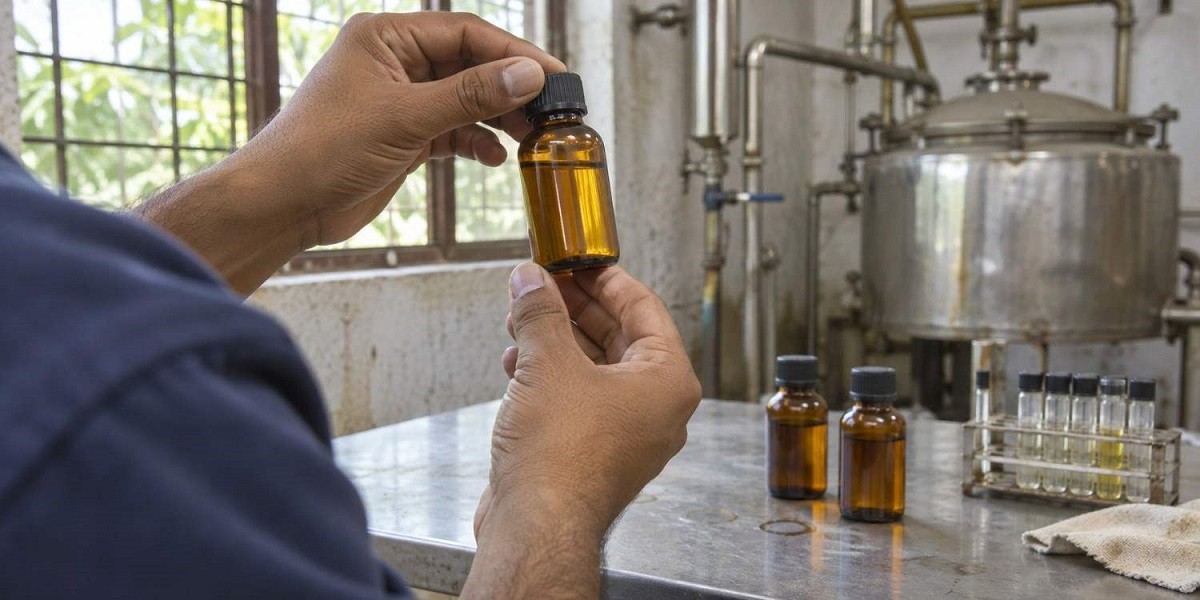
Looking for a reliable essential oil supplier in India – cut out the middlemen and buy directly from the producers. The result will be oils of better quality at a lower price.
Suppliers must be verified using their CIN or GST registration. Verify their business address, export experience, and buyer references.
Find out their minimum order quantities, how long it takes to fulfill an order, how much they can produce and how they handle consistent repeat orders. Ask for a GC-MS report, SDS, and COA (Certificate of Analysis) to ensure quality.
Verify botanical identity, batch traceability, purity, adulteration and storage. Verify leakage prevention, packing specifications and export documents. Compare quotes using equivalent oil specs, not price.
US Import Regulations for Essential Oils: FDA, CBP, and Other Agencies
- With so many federal regulations to navigate, it’s essential to confirm importer compliance before shipping essential oils into the US.
- US Customs and Border Protection (CBP) is in charge of entry declarations, tariff classifications (HTS codes), customs value, and ultimate admissibility.
- The only basis for regulatory control is the intended use of the product. Essential oils are regulated by the US Food and Drug Administration (FDA) based on marketing. Importers and suppliers of finished cosmetics or cosmetic ingredients are not required to register with the FDA. However, if the product makes strong therapeutic claims, such as claims to relieve pain or anxiety, then the product is considered a drug and must go through rigorous pre-market approval and facility registration processes.
- Furthermore, if the oils are meant for consumption, they must meet with food or dietary supplement regulations, which include food facility registration.
- If oils contain endangered or restricted plant constituents, the USDA can enforce strict agricultural quarantine and licensing requirements in addition to the FDA. Other agencies, such as the EPA or CITES, may apply depending on the plant source.
- Importers have the final legal responsibility to ensure that all agency criteria are completed before the cargo departs.
Essential Oil HS Codes and Import Duties in the USA
Proper classification of traded commodities helps avoid severe legal penalties, expensive supply chain delays and incorrect duty payments; HS and HTS codes classify commodities domestically and internationally. Essential oils, absolutes, and resinoids are all imported under category 3301; however, each variety is categorised under a different subheading, according to the classification system.
The classification is greatly influenced by botanical source, specific chemical composition, method of extraction, and desired product form. For the most current duty rates applicable to importers, the best source is the USITC’s official Harmonized Tariff Schedule. Other tariffs include country-specific punitive penalties, the Merchandise Processing Fee (MPF), and the Harbor Maintenance Fee in addition to the fixed base customs duty rate (ranging from 0% to 3.8%).
Pricing must be confirmed for the specific shipment entry date, product composition, and country of origin. This is necessary, due to the fact that trade restrictions are subject to change.
Documents Required to Import Essential Oils from India

For essential oils imported from India, product-specific or regulatory compliance documentation and the general shipping documents are required.
1. Routine Commercial and Shipping Documents
Commercial Invoice: The exporter provides documents relating to the deal, including contact details of the buyer and seller, HS codes (such as 3301.29) used for customs valuation.
Packing List: Designed by the exporter for the inspection of the physical cargo to show the dimensions, weight, and quantity of the packages.
Bill of Lading/Air Waybill: This document is issued by the carrier (shipping company or airline) and serves as both the contract of carriage and title to the goods.
Import Entry Data & Customs Declarations: Documents to be declared officially to the destination border by the importer or customs broker.
2. Product-Specific and Conditional Documents.
Certificate of Analysis (CoA): Ensure that each batch of oil has GC-MS chemical profiles and a certificate of purity from the supplier or lab.
Safety Data Sheet (SDS): A product safety report prepared by the manufacturer on possible risks, including fire sources, and safe handling of the product.
Certificate of Origin: This document is prepared by the exporter or by the local chamber of commerce to establish the Indian origin or to avail preferential tariff rates.
Insurance Certificate: This is a document prepared by the insurer to show that they have marine cargo coverage, when applicable.
Phytosanitary Permits/Certificates: These will be issued by agricultural boards when plant-based goods need to be certified as pest-free.
FDA Data / Notices: Prepared by the exporter or importer (e.g., US FDA facility registration) if required by the destination health agency.
How to Ship Essential Oils from India to the USA
The logistical and security challenges of shipping essential oils from India to the US are formidable. Different oils have different shipping restrictions based on things like flash point, volatility, and volume, not all on the basis of being “essential oil.” Many oils are dangerous cargo because they are volatile and very flammable. Please check the transport category of the product before ordering.
For longer shipments, there is specialised, low-cost and high-capacity expedited sea freight. For shorter shipments, air freight is the best option because of its speed and security.
Choosing the right Incoterm is crucial; utilise FCA or FOB to manage origin costs or DAP/DDP to govern the delivery experience, but avoid expensive air freight.
It has to guarantee that nothing goes to waste. All applicable rules and regulations should be followed in handling certified outer boxes, padding, and secondary containment. When shipping internationally, ensure smooth delivery with real-time tracking, full cargo insurance and prepare for possible delays at the US border.
How Much Does It Cost to Import Essential Oils from India to the USA?
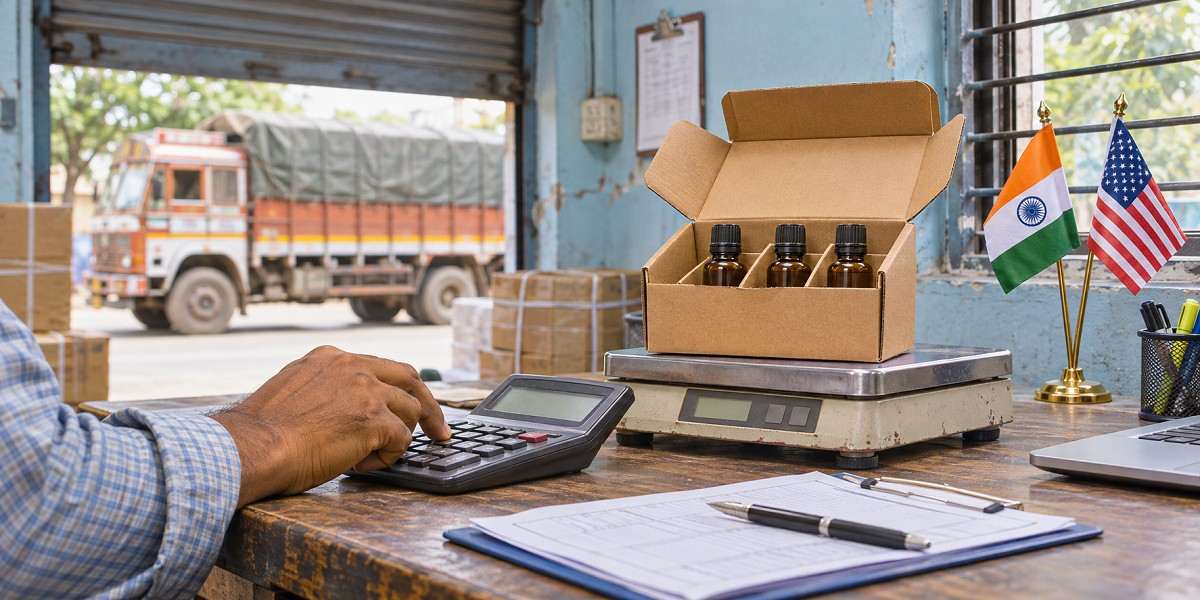
The overall cost of importing essential oils from India to the United States varies by cargo size. Still, a typical 50 to 100 kg commercial shipment runs from $2,500 to $6,500, or more, minus the bulk product purchase price. Below is a breakdown of the individual cost components:
Product & Samples: Bulk essential oils range in price from $10 to $100+ per kg depending on the kind (for example, peppermint versus sandalwood). Pre-shipment samples cost between $50 and $150 per batch, including courier fees.
Origin fees cover packing dangerous or flammable liquids for export in barrels approved by the UN, transporting the goods within India to Navra Sheva or Mumbai airport, and going through export customs procedures. All of these fees add up to $300 to $600.
Because they last so long and are so valuable, the best way to send essential oils is by air, which costs $4 to $8 per kg, or $400 to $800 altogether.
US Customs Duties and Fees: Most essential oils enter the United States duty-free, under the HTS code 3301, although others are subject to rates of up to 4.2%. The Merchandise Processing Fee (MPF) is 0.3464% (minimum $32.71, maximum $662.06), whereas the Harbour Maintenance Fee (HMF) is 0.125% (for marine freight only).
Broking and Bonds: Customs brokers charge between $150 and $300 per entry. A continuous import bond is $500 to $600 per year, but a single-entry bond is around $50 to $100.
Destination Logistics: US port handling, potential FDA inspections, and final-mile delivery by LTL (Less-Than-Truckload) or couriers cost $300 to $800.
Different types of oil cost between $100 and $200 for GC-MS quality testing. In the US, it costs $150 to $400 to register and label a facility with the FDA. To determine your total investment per unit, apply the following formula:
The landed cost is calculated as follows:
Product cost + origin charges + goods + insurance + customs duties and fees + clearance + destination delivery + any other applicable costs.
Common Mistakes to Avoid When Importing Essential Oils
These are some important things to remember when importing essential oils:
- If you choose vendors based on price alone, you typically get artificial, diluted or polluted oils.
- If you order in bulk without a whole lot of testing and getting a sample approved before shipment, you could lose a lot of money.
- Using outdated duty rates or incorrect Harmonized Tariff Schedule codes will cause customs delays and hefty fines.
- Assuming incorrectly that FDA registration is required or not understanding the impact of certain marketing claims on compliance.
- Not verifying that major transit restrictions, such as flashpoints, are observed and dangerous goods are packed properly.
- Freight, customs processing fees, bonds, and unexpected storage charges are not taken into account.
How to Choose Between Bulk Importing and Small Test Orders
To identify the best strategy, weigh the reduced per-unit cost of larger shipments against your available working capital, inventory holding risks, product shelf life, and physical storage needs. Furthermore, strong quality acceptance criteria must be established throughout the testing process before scaling up.
When deciding between bulk imports and modest test purchases, consider your product’s market maturity. Small test orders ensure product quality and initial market demand, while reducing early financial risk. Bulk purchasing, on the other hand, becomes ideal after demand is established and manufacturing cycles begin to repeat.
Importantly, the lowest per-kilogram rate rarely translates into the lowest overall cost. Hidden costs—such as additional warehouse fees, capital invested in slow-moving goods, potential spoilage, and the risk of discarding defective mass shipments—often offset upfront volume reductions, making a deliberate scaling plan far more cost-effective.
FAQ’s – Import Essential Oils from India to the USA
We hope you now understand how to bring essential oils from India into the United States. Here are some more Frequently Asked Questions:
Q1: Can I import essential oils from India to the USA?
Ans. Following federal guidelines, you can import Indian essential oils into the US. They are regulated by the FDA as cosmetics, pharmaceuticals, or food. CBP and USDA enforce agricultural and customs laws. Fill out labels and records properly.
Q2: Do I need an import license to import essential oils?
Ans. Most consumer goods do not require a specific import authorisation. However, certain products (firearms, alcohol, tobacco, pharmaceuticals, food) require permission from appropriate agencies (ATF, TTB, FDA). All importers need a CBP Importer Number and should register with CBP.
Q3: Do essential oils require FDA approval or registration?
Ans. Essential oils sold as cosmetics or perfumes don’t need FDA approval. If they treat or prevent disease, they are medications and must be FDA-approved before sale. MoCRA requires FDA registration of factories and product lists.
Q4: What is the HTS code for essential oils?
Ans. Most essential oils are classified as HTS 3301.29.50 (other essential oils, not citrus). Certain oils have their own subheadings. Verify everything with a customs broker who is an expert.
Q5: How can I check the current import duty?
Ans. Find your product’s 10-digit number and import duty in the US International Trade Commission’s Harmonised Tariff Schedule Search database. Essential oils fall under Chapter 33 (HTS 3301) and have base rates of 0% to 3.8%, depending on the plant.
Q6: Which documents are required for customs clearance?
Ans. If you want to bring essential oils into the United States, you will need a Commercial invoice, a packing list, a Bill of Lading or Air Waybill, an FDA Prior Notice, a Certificate of Analysis (COA) or GC-MS report, a Safety Data Sheet (MSDS or SDS), and a Certificate of Origin.
Q7: Is air freight or sea freight better for essential oils?
Ans. Because it delivers quickly and keeps the temperature stable, air freight is better for small, valuable, or time-sensitive essential oil orders. Many oils, on the other hand, are considered flammable, risky goods, so sea freight is better for bigger, cheaper shipments, even though it takes longer to get there.
Q8: How do I verify the quality of an Indian essential oil supplier?
Ans. Ask for a batch-specific GC-MS report and a Certificate of Analysis (COA) to check the chemical purity of an Indian essential oil supplier. Make sure that the company is real and has up-to-date GMP or ISO certifications. Also, check that the full Latin botanical name is written on the label.
Q9: Can I import essential oils for resale or cosmetic manufacturing?
Ans. You can bring in essential oils to sell or use in makeup as long as you follow the rules. To make things in India, you need an Import Export Code (IEC) and a CDSCO registration.
Conclusion
Bringing Indian essential oils to the US requires planning, quality inspections, and compliance. Avoid unexpected customs delays and fines by checking sources, determining the product’s demands, choosing the right HTS categories, and completing all documentation. As crucial, knowing the complete landing cost helps you budget and source profitably. Make a short list of credible Indian suppliers, ask for product samples and quality papers like COA and GC-MS reports, and discuss import laws with a skilled US customs broker before ordering.