- 24/09/2026
- Rohit Mishra
Stability testing is a key element in the development of reliable and safe-to-use cosmetics. It checks the product for safety, appearance, compatibility with packaging, and how it performs under various storage conditions during its life cycle.
Bo International is a professional cosmetics manufacturer formulating stability-tested formulations. This means that the quality, performance and appeal of the products from a brand are consistent from production to purchase, thus ensuring customer satisfaction.
What Is Stability Testing in Cosmetics?
The purpose of stability testing is to guarantee that cosmetics will keep looking good, be safe, and work for a long time. The products are tested in different storage conditions to see whether their properties, such as colour, smell, texture, protection against microbes and compatibility with the packaging, change.
Cosmetic shelf life testing is essential for validating new formulations and establishing durability while also verifying existing products after changes to ingredients, suppliers or packaging. A product that looks good initially is not necessarily stable long-term; stability testing confirms consistent performance until the last use.
Why Is Stability Testing Important for Cosmetic Products?
Cosmetic stability testing can help you determine the shelf life of a cosmetic product and any signs of formulation instability, including changes in colour, scent, texture or separation. Finding packaging issues that impact product quality is very helpful to ensure consistent quality. Stability testing before marketing can avert product failure, costly recalls and reformulation.
When the products are constantly satisfying or surpassing customer expectations, this gives brands more information to work with in terms of how they want to launch, formulate, package, manufacture and store their products.
What Parameters Are Checked During Cosmetic Stability Testing?
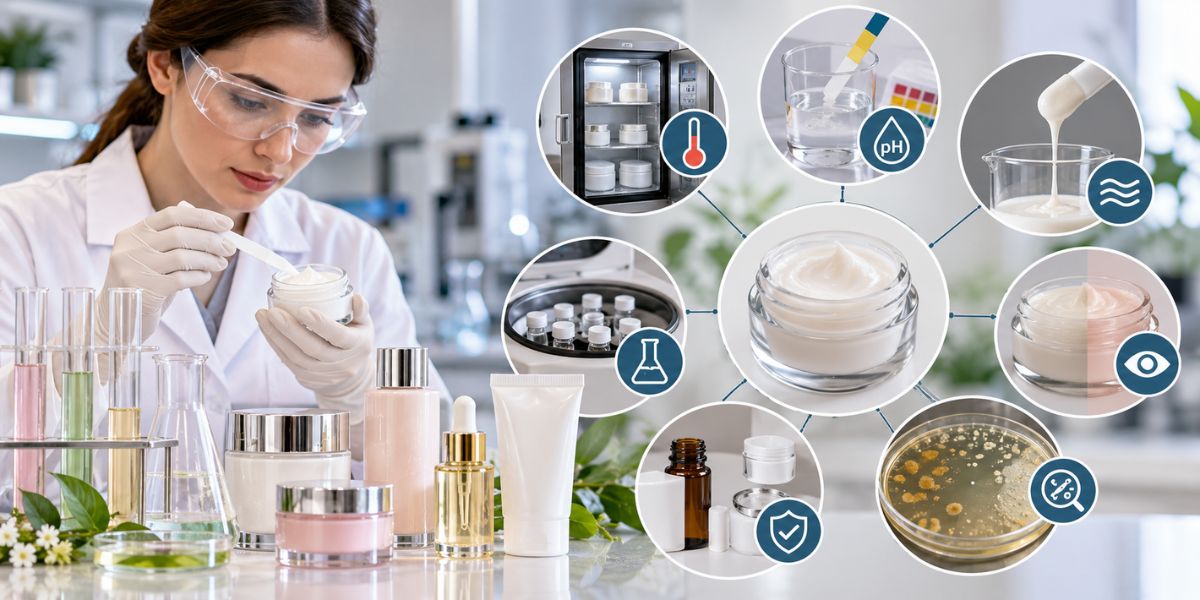
Stability Testing Parameters
Summary of key parameters evaluated during product stability testing, including what is assessed and why each parameter is important.
| Stability Testing Parameter | What Is Checked? | Why It Matters |
|---|---|---|
| Appearance and Colour | Changes such as browning, discolouration, sedimentation, crystallisation, or other visible abnormalities. | Helps confirm physical stability and maintain the product’s visual appeal. |
| Odour and Fragrance | Changes in fragrance character, intensity, freshness, or unexpected odours. | Can indicate oxidation, ingredient degradation, rancidity, or possible microbial contamination. |
| Texture and Viscosity | Changes in spreadability, thickness, grittiness, thinning, or thickening. | Helps identify unstable emulsions, polymer degradation, or other formulation problems. |
| pH Stability | pH changes at specified intervals during storage. | Helps maintain formulation stability, preservative effectiveness, ingredient integrity, and skin compatibility. |
| Phase Separation | Separation, creaming, sedimentation, syneresis, or crystallisation. | Helps identify emulsion instability or formulation failure that could affect product performance and appearance. |
| Microbial Quality | Total aerobic microorganisms, yeast, mould, and relevant pathogens; preservative efficacy may also be assessed | Helps verify microbiological quality and whether the preservation system can control microbial growth. |
| Packaging Compatibility | Interactions between the product and its container, including leaching, adsorption, swelling, stress cracking, and closure failure. | Interactions between the product and its container, including leaching, adsorption, swelling, stress cracking, and closure failure. |
Different Types of Stability Testing for Cosmetics
Stability testing of cosmetics ensures products retain their quality, safety, and performance across a range of conditions. Before releasing a product to the market, manufacturers use particular testing processes to determine how well formulations survive environmental stressors, forecast shelf life, and ensure customer safety.
Accelerated Stability Testing
This method is to determine the shelf life of the product in a shorter period of time. The product is subjected to high temperature (for example, 40°C ± 2°C) and humidity. These tests assess the durability of the product for a period of three to six months.
Real-Time Stability Testing
This long-term method tests the product at room temperature for 12 months, or more, which is its expected shelf life. Accelerated test results need real-time stability testing.
Freeze-Thaw Testing
This sort of testing evaluates the stability of emulsions and suspensions, looks for crystallisation, sedimentation, or cloudiness and determines whether it is reversible.
Centrifuge Testing
During centrifuge testing, creams are heated and spun at 3000 times per minute. Oil droplets form on unstable cream. This is called ‘creaming’, and stable creams should not cream. This 30-minute test is suitable for cream emulsions.
Light Stability Testing
This kind of cosmetic stability testing determines how light affects the product (for example, colour change) and its packaging (for example, stress cracking).
Packaging Compatibility Testing
This type of testing evaluates the interaction between a product and its packaging to ensure a long shelf life and prevent leakage or chemical migration before market release.
How Stability Testing Differs Across Cosmetic Categories
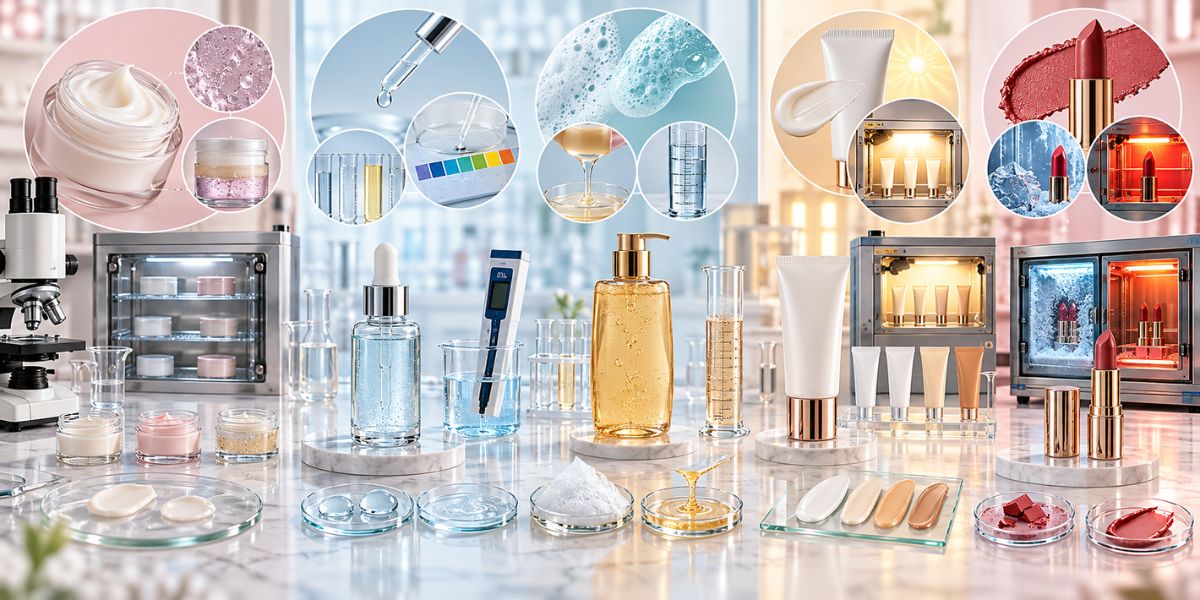
Stability testing varies by product type, because formulations have different ingredients, textures, packaging formats and storage requirements. In skincare, the primary concerns are emulsion stability and viscosity, but in hair care, surfactant performance and compatibility with packaging are the main concerns.
Care of infants demands careful precautions. Perfumes and fragrances emphasise oxidation and scent stability. Men’s grooming, bath & shower, Ayurvedic and herbal and essential oil-based products require testing tailored to their specific ingredients, textures and storage conditions.
What Can Happen If a Cosmetic Product Is Not Properly Tested?
Poorly tested cosmetics can develop colour or odour changes, texture problems, separation, pH variation, or packaging leakage during storage and use. Problems like these can jeopardise safety by decreasing product performance and increasing concerns about microbes. In the long run this can harm a company’s reputation and consumer confidence in it and may lead to consumer complaints, product recalls and returns.
The Role of Stability Testing in Cosmetic Product Development
Stability testing connects formulation with successful commercial production. The process typically follows Concept → Formulation → Sampling → Stability Evaluation → Final Formula → Production → Packaging → Market Launch.
At Bo International, this structured approach supports an end-to-end manufacturing journey, covering product selection, custom sampling, stability-tested formulation, scaled production, packaging, and shipping to help brands deliver consistent products to market.
Stability Testing For Private Label and Custom Formulations
For B2B brands, stability testing ensures that private label cosmetics are safe, consistent and package-compatible, even with tried-and-true formulations. The stability of a custom formulation can be affected by changes in the ingredient composition, concentrations, packaging or processing, so product-specific testing has to be performed.
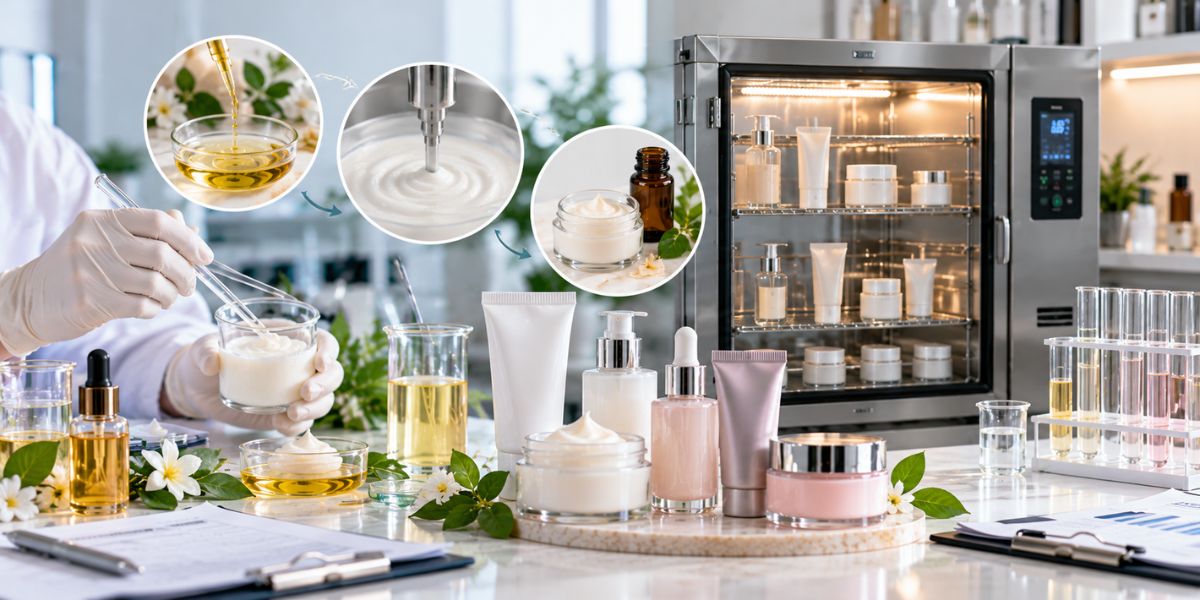
Extensive testing prior to large-scale contract manufacturing can help to identify formulation issues early on, reducing costly production risk and ensuring consistent shelf-life performance.
How a Cosmetic Manufacturer Supports Stability Testing
A professional manufacturing partner should follow cosmetics guidelines on the stability testing of cosmetic products and provide an experienced formulation team, laboratory and R&D support, product-specific stability testing, robust quality control, packaging compatibility evaluation, and complete testing documentation.
Stability testing is a key element in the development of reliable and safe-to-use cosmetics. It checks the product for safety, appearance, compatibility with packaging, and how it performs under various storage conditions during its life cycle.
Bo International is a professional custom cosmetics manufacturer formulating stability-tested formulations. This means that the quality, performance and appeal of the products from a brand are consistent from production to purchase, thus ensuring customer satisfaction.
When Should Stability Testing Begin?
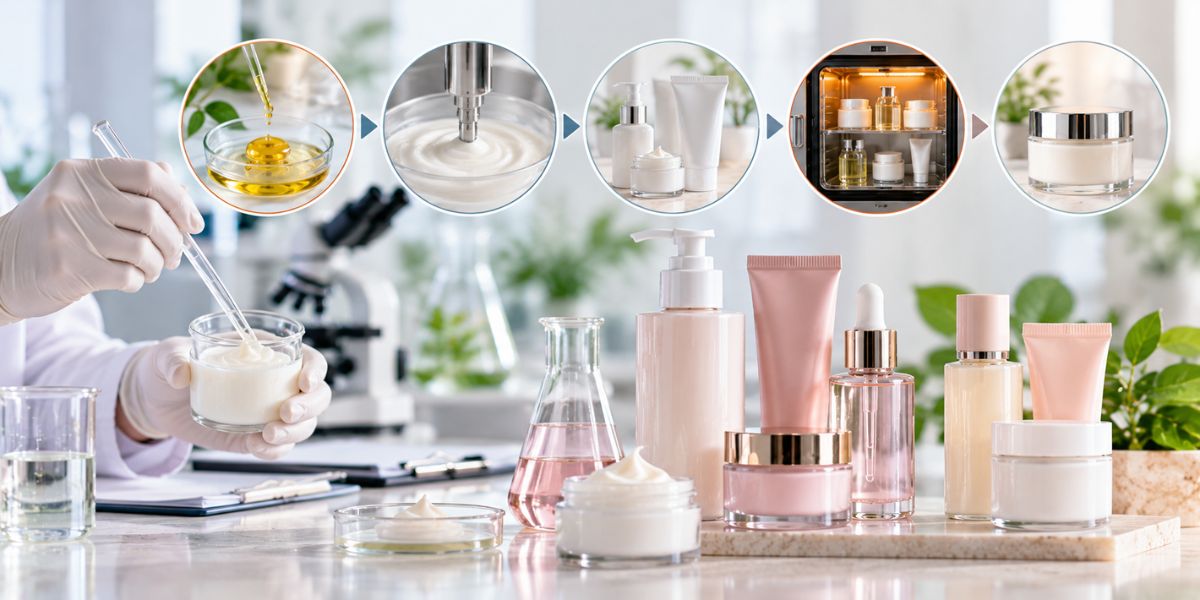
Stability testing in cosmetics should not be delayed until shortly before launch. It should start early in the product development process for new formulations to establish a baseline. Evaluation must continue during formulation development, following significant formula changes and during sample evaluation. Testing before final packaging and large-scale production is another critical checkpoint to ensure product safety, quality and long-term integrity.
How Stability Testing Helps Cosmetic Brands Reduce Launch Risks
By following guidelines on stability testing of cosmetic products, cosmetic brands identify formulation and packaging issues before production, reducing unexpected problems and costly rework. It helps with better packaging decisions and supports consistent colour, texture, pH and performance.
The product validation in different conditions can help the brands to increase their launch confidence, improve the customer experience and reduce the number of complaints on product quality. This will help the brand in the long run to grow.
Choosing a Cosmetic Manufacturer for Stability-Tested Products
Here is the practical checklist for choosing the right cosmetic manufacturer for stability-tested products:
- Does the manufacturer have an experienced R&D team?
- Are formulations tested through accelerated and real-time stability studies?
- Can they develop custom formulations for different requirements?
- Do they conduct packaging compatibility and microbial testing?
- Are quality-control procedures followed?
- Can they provide COAs, batch records and testing documentation?
- Do they offer private label and contract manufacturing?
- Can they manufacture diverse cosmetic categories and scale production?
Final Thoughts
Stability testing covers many topics other than whether a cosmetic product separates. It checks the formulation for consistency, quality, packaging compatibility, safety and stability over a period of time under different conditions. For brands seeking reliable product development and manufacturing support, following stability testing guidelines for cosmetics and partnering with an experienced cosmetic manufacturer can help turn stable formulations into market-ready products.