- 07/10/2026
- Rohit Mishra
For B2B beauty brands, choosing between a custom formulation and a ready-made formula is one of the first decisions that can shape a product’s market journey. A ready-made cosmetic formula can support a faster launch with lower cosmetic product development costs, while a custom cosmetic formulation offers greater control over ingredients, product performance, and differentiation.
Learning about custom vs ready-made cosmetic formulas helps brands better evaluate time, money, market and positioning in the long run. For niche and established brands, product customization that reflects the unique idea and customer expectations may be more important than speed and affordability to startups.
What Is a Ready-Made Formula?
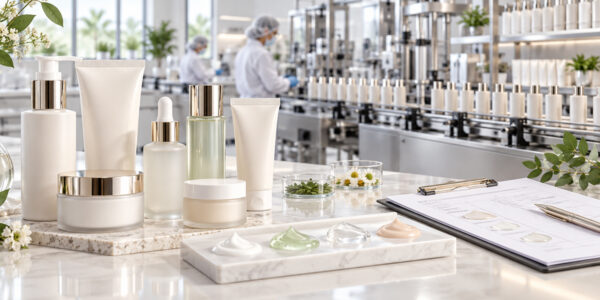
Since the manufacturer has already developed and tested the recipe for a product, it is a ready-made formula. Ready-made formulas for cosmetic brands can save money by using off-the-shelf (OTS) recipes, launching pre-existing formulations in their name, bypassing the long R&D process. This approach could lead to simpler product selection, faster development and simpler formulations.
Additionally, it’s a viable choice for companies seeking to explore untapped categories with a modest starting point. Even though the formula is standard, brands are able to differentiate themselves through packaging, branding, positioning and targeted marketing. This makes ready-made formulations a practical option for businesses developing private label beauty products.
What Is Custom Formulation?
This process is known as custom formulation, when you create a cosmetic product from scratch, as per a brand’s unique specifications. Custom formulation for beauty brands can think about things like ingredients, texture, scent, intended benefits of the product, their customers and market needs. Product formulation experts work closely with research and development teams to make sure that the finished products meet the brand’s expectations and performance targets, or better.

As part of this process, samples may be developed, evaluated, modified, and tested to determine their performance, stability, and safety. The formula can be put into production after it has fulfilled all agreed-upon specifications, and other criteria. This approach is particularly relevant for custom beauty product formulation, where brands want greater control over the final product.
Custom Formulation vs Ready-Made Formula: Key Differences
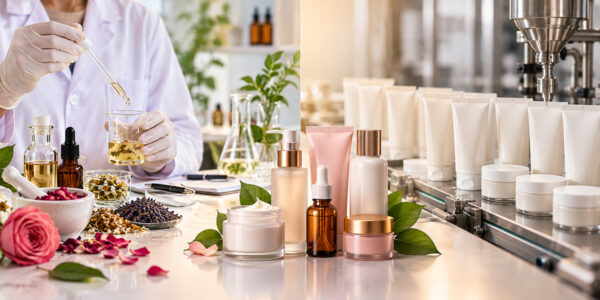
The custom formulation vs ready-made formulas can affect, in the long run, the investment needs and product positioning of the company and the launch plan. Ready-made solutions can reduce development times and simplify product selection, but a custom formulation gives you greater control over the ingredients, textures, performance, and other characteristics of the product.
Selection should be guided by priorities, not initial investment and time to market. Each brand has to think about its product idea, its target market, its financial resources, its production volumes and its long-term goals. When you look at expansion later on, the scalability of production is important.
If a company wants to get into the market faster, then a ready-made option might be a good fit for their development strategy. Brands seeking greater differentiation and product control may explore custom cosmetic manufacturing as part of a longer-term product development plan.
When Should a Brand Choose a Ready-Made Formula?
A brand should consider a ready-made formula when it needs to launch quickly without extensive formulation development. A private label cosmetic formulation based on an existing formula can be a suitable option when a product requires minimal initial development and the budget is limited, or when a business wants to test consumer demand before investing in a fully customized product.
This method can also help well-known brands to introduce new products with multiple SKUs and increase their product selections. This method is most effective when no need for very specific formulation characteristics, patented ingredients or exceptional performance criteria of the product exists. When that happens, companies can spend their energy on packaging, branding, marketing, distribution and validating their market position.
When Should a Brand Consider Custom Formulation?
Custom formulation for private label manufacturer may be appropriate when a business needs greater control over its product concept, performance, and positioning. Consider products with new ideas or those that need unusual components such as a rare botanical extract or active ingredient.
If your product idea is based on a particular texture, finish, scent or sensory experience, then brands may opt for custom skincare formulation. Custom development can be a powerful tool to better meet the demands of individual consumers and to stand out from the competition.
For businesses developing a long-term hero product, custom cosmetic formulation for B2B brands can provide greater control over the product specifications and support a distinctive brand identity.
What Happens After the Formula Is Finalized?
Once the formula is finalized, a formal B2B process usually includes sampling, approval, safety testing, stability testing, packaging compatibility, label development and more. After that, large-scale production can start, then filling, packaging, quality control and finally delivery.
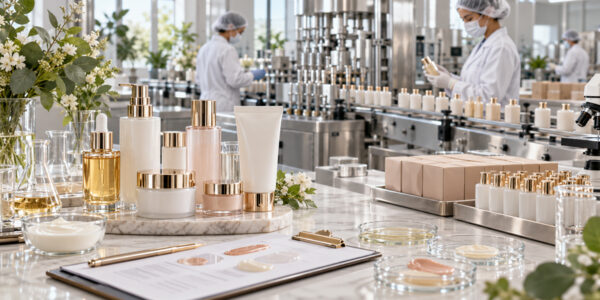
When choosing a manufacturing partner brands need to make sure their needs are met. A well-coordinated B2B cosmetic manufacturing process connects formulation, testing, production, packaging and delivery, which in turn reduces avoidable delays between development and launch.
How to Choose Between Custom and Ready-Made Cosmetic Formulas?
Understanding how to choose between custom and ready-made cosmetic formulas starts with identifying the brand’s priorities. If you care most about simplicity, ease of development, low initial investment and time to market, use a ready-made formula. You may have to create a custom formulation that emphasises things such as uniqueness, more control over the product, and long-lasting differentiation.
Before deciding, brands should discuss their product concept, target market, budget, MOQ, timeline, ingredient preferences, performance requirements, and future growth plans with their manufacturing partner. This helps determine whether an existing formula or a custom vs ready-made cosmetic formulation approach better fits the project.
FAQs
Q1. What is the main difference between custom and ready-made formulas?
A1. Custom formulas are meant to meet the unique requirements of every brand. Ready-made formulas are formulations that have already been developed and can be chosen and produced with little to no development time required.
Q2. Is custom formulation more expensive?
A2. Custom formulation can involve higher development costs, as it may require specialised R&D, ingredient sourcing, sampling, testing, and formulation adjustments. The overall cost depends on the product requirements, ingredients, MOQ, and development scope.
Q3. Which option allows a faster product launch?
A3. A ready-made formula can generally support a faster launch because it has already established the formulation development stage. Brands can focus on product selection, packaging, branding, compliance and production planning.
Q4. Can a ready-made formula be customised?
A4. In some cases, manufacturers may be able to modify an existing formula to meet specific requirements. The extent of customisation depends on the formula, ingredients, desired changes, testing requirements, and manufacturing capabilities.
Q5. Can a manufacturer handle formulation and production?
A5. Yes. Many contract manufacturers provide formulation and production services under one workflow. Depending on the manufacturer, the process may include formulation development, sampling, testing, packaging, labelling, manufacturing and other production requirements.