- 07/10/2026
- Rohit Mishra
Artificial intelligence is changing manufacturing, personalisation, product development and cosmetic formulation. Cosmetics companies are using artificial intelligence (AI) at every stage of the innovation lifecycle to meet the demands of today’s beauty consumers for fast, safe, customised and environmentally friendly solutions.
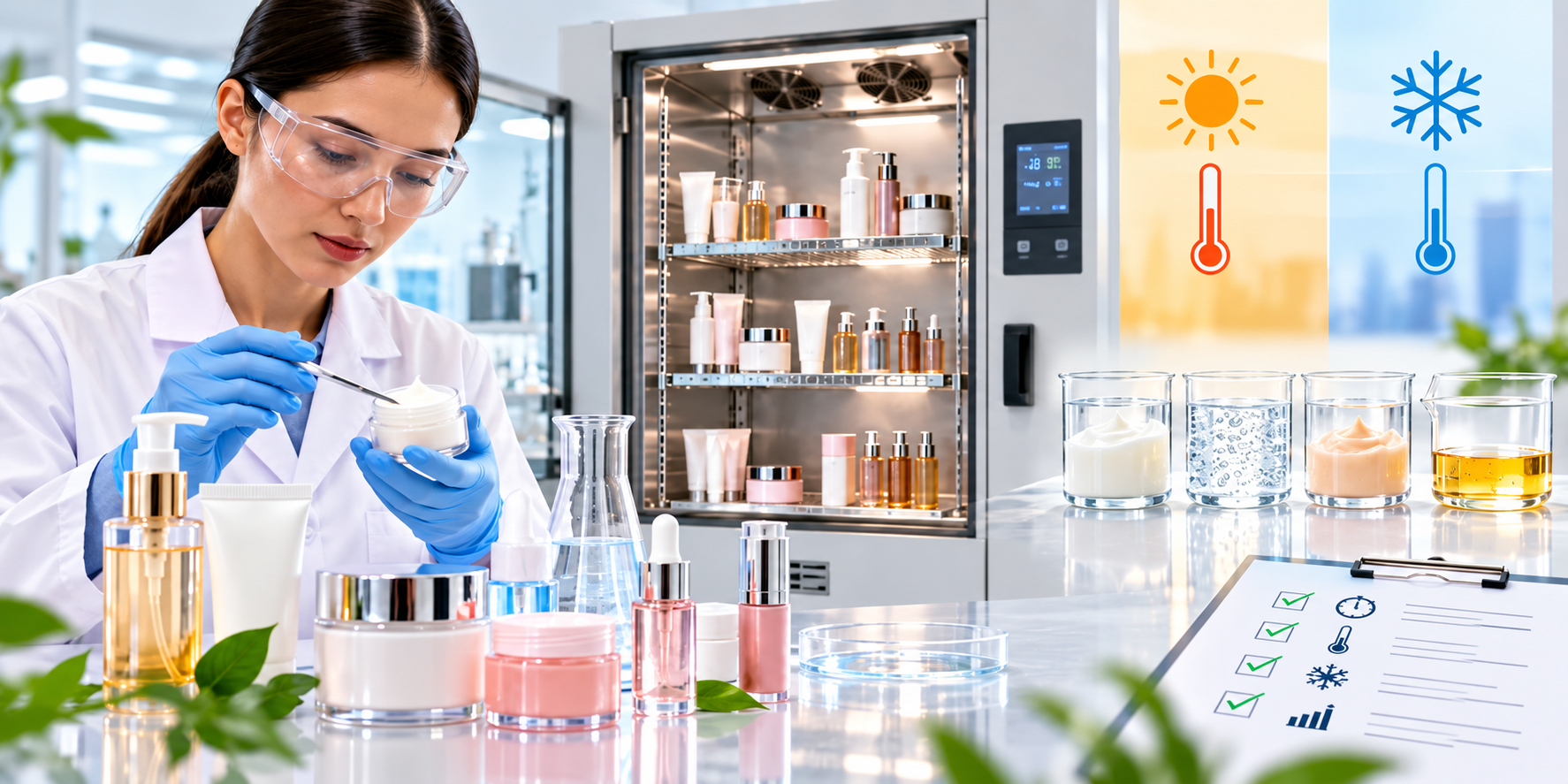
AI in cosmetic manufacturing improves ingredient research, formulation, packaging design, safety testing and regulatory compliance. Research and Markets estimates the artificial intelligence (AI) cosmetics manufacturing market will grow at a compound annual growth rate (CAGR) of 22.3%, from $0.58 billion in 2025 and $0.71 billion in 2026 to $1.6 billion by 2030.
AI-Powered Formulation & Ingredient Optimisation
AI-optimised ingredients and formulations are revolutionising product development and significantly reducing R&D time. Artificial intelligence (AI) algorithms replace trial-and-error chemistry by analysing thousands of variables simultaneously. Among the data points assessed are raw ingredient qualities, chemical interactions, skin type and stability limits. AI can also support custom cosmetic formulation by helping formulators evaluate ingredient combinations and optimise product characteristics based on specific performance requirements.
Artificial intelligence examines formulas, ingredient interactions, skin types, and substances. Artificial intelligence can assist in searching for compound combinations and in optimising formulations. This process is an example of how AI in cosmetic manufacturing works, specifically for decision support in the area of formula, using big datasets and predictive models. AI accelerates research and development by reducing the number of formulation trials.
It also detects formulation issues like instability and irritation before a lab batch is mixed. Finally, this computational technique decreases manual testing cycles, limits ingredient waste and shortens time-to-market. Beauty and chemical companies can now go from original concepts to optimised, skin-safe products more quickly than ever before before.
Virtual Formulation & Simulation
Artificial intelligence is reducing the time needed for virtual formulation and simulation by using predictive digital modelling instead of lengthy trial-and-error experimentation. In industries as diverse as consumer goods, materials science and pharmaceuticals, artificial intelligence systems comb through vast databases to predict how various chemicals and compounds will react.
Machine learning algorithms can be used to predict the stability, potency and safety of a product. They allow the simultaneous simulation of thousands of combinations of molecules and environmental variables. The digital-first approach can cut physical test time, physical waste and research and development costs via virtual testing.
AI for Personalised Cosmetic Formulations
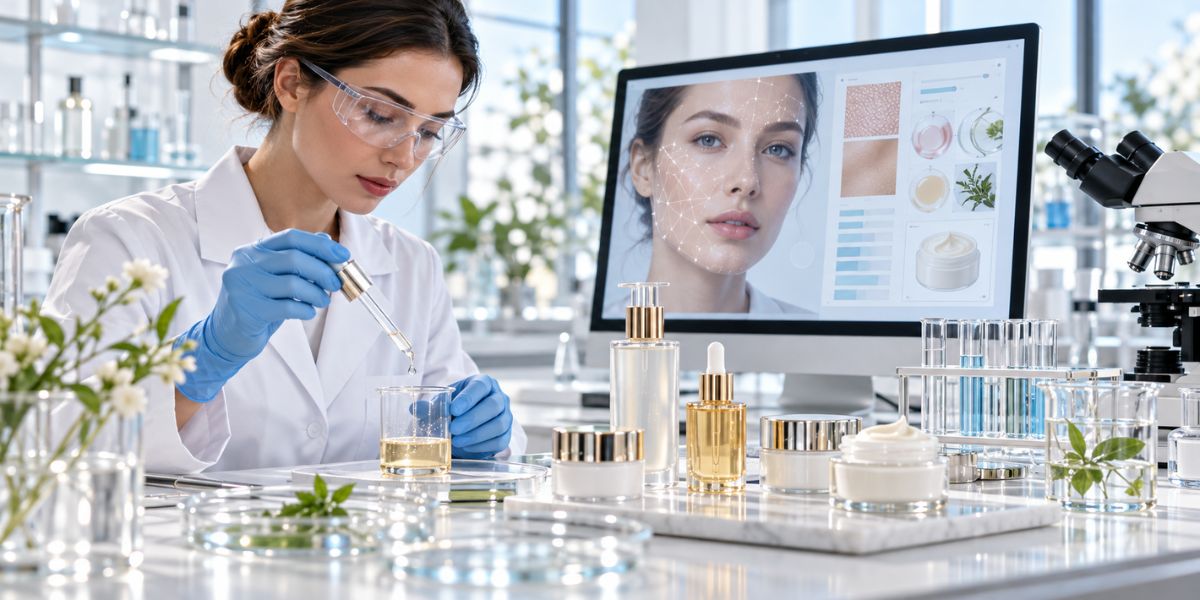
Artificial intelligence is revolutionising cosmetics by standardising the creation of skin-specific formulations. Algorithms for artificial intelligence can evaluate skin biometrics as well as consumer data such as genes, lifestyle and environmental factors to predict potential interactions of specific substances with individual skin profiles. The increasing adoption of artificial intelligence is also driving demand for customised skincare products, as it provides personalised skincare recommendations and formulations.
The old way of trial and error in skincare is becoming obsolete thanks to this technology. AI-driven platforms comb through massive datasets to identify optimal ratios of active ingredients to create personalised serums, foundations and creams. Hyper-customisation can help brands with product efficacy, consumer engagement and possibly ingredient waste reduction. For a skincare manufacturer, these AI-supported insights can help guide the development of products designed around specific skin concerns and consumer needs.
AI in Quality Control & Smart Manufacturing
AI improves quality control in smart manufacturing by introducing advanced technology at every stage of the manufacturing process. Computer vision systems enable rapid quality inspection by quickly and accurately identifying visual or manufacturing defects in real time. With modern laboratory equipment and automated processes, it is easy to accurately administer ingredients and constantly monitor consistency.
That’s one of the important areas where AI in cosmetic manufacturing helps modern production facilities. Connecting AI data with enterprise and machine networks can improve adaptive feedback, process optimisation, real-time tracking and predictive maintenance for manufacturers. The manufacturing industry can use these capabilities to shift from reactive correction to intelligent and predictive operations.
AI for Data-Driven Product Development
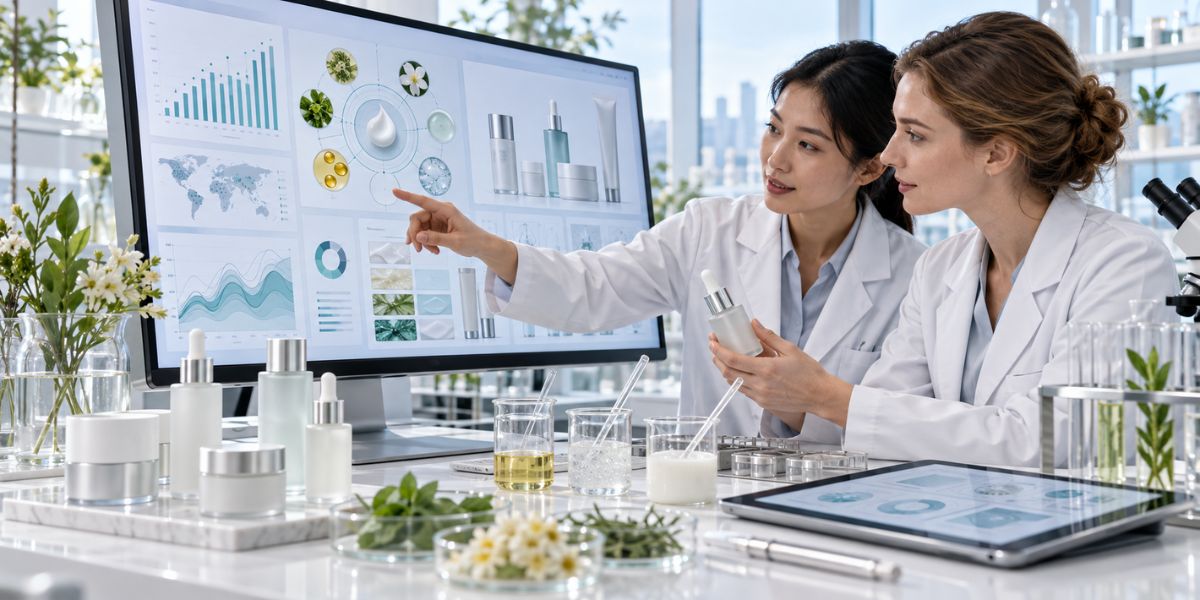
The use of AI in product development can significantly improve production efficiency by replacing labour-intensive and error-prone manual testing with accurate digital testing. Artificial intelligence can quickly scan huge quantities of data to improve formulations and ingredient selection while also greatly reducing material waste. Reduced R&D times are a direct consequence of the increased use of advanced product simulations to predict future performance and identify potential defects before physical prototyping.
And finally, when data is used to inform decisions in R&D, production workflows become more efficient, time-to-market is reduced and fewer mistakes are made on the factory floor. Through this proactive approach, companies can reduce resource demands and still develop high-quality products. AI in cosmetic manufacturing companies can assist with data-driven development, enabling better decisions in formulation, testing, and production.
What AI Means for Cosmetic & Contract Manufacturers
The use of AI is accelerating research and development, and AI can also support private label manufacturing by helping brands and manufacturers evaluate product concepts, refine formulations, and improve development workflows before moving into large-scale production.
Artificial intelligence systems aren’t formulators but use large data sets to predict how ingredients will interact and how stable and safe the product will be before any physical prototype is made. This explains what AI in cosmetic manufacturing is: a technology-assisted approach that uses data, automation, and predictive modelling to improve different stages of product development and production.
However, algorithms can only provide initial ideas and data-driven insights. To make these predictive powers work together with the large human expertise in formulation science, regulatory conformance and production scale-up. By combining AI-driven speed with experienced R&D judgement, cosmetic contract manufacturing partners can help personal-care brands move high-performance, compliant, and sustainable innovations to market more efficiently.
Why Human Expertise Still Matters
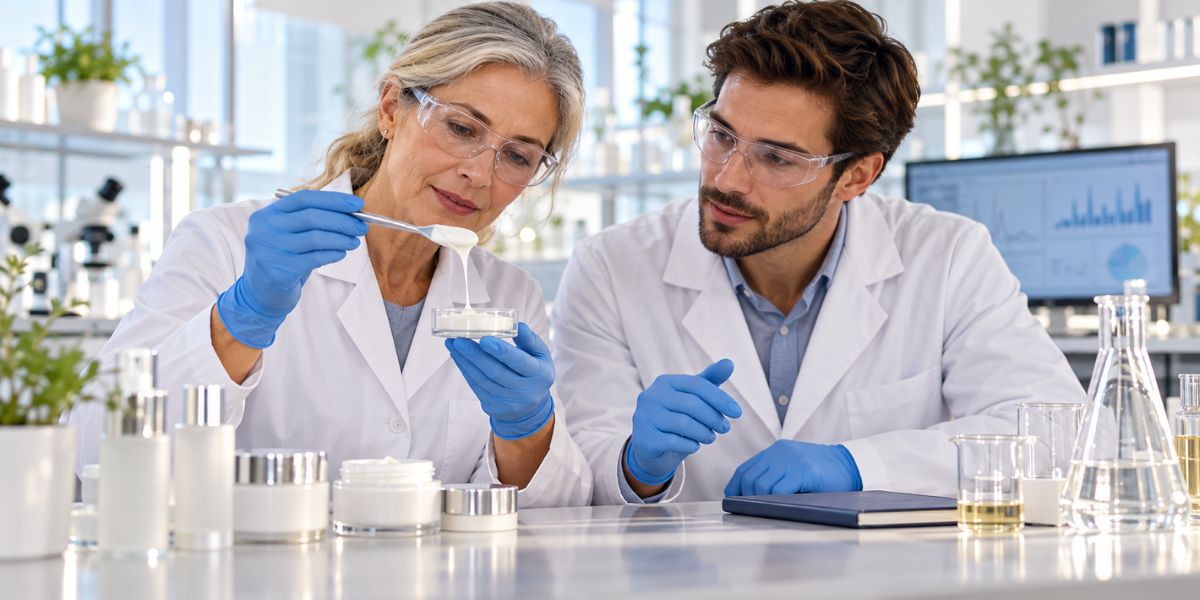
Even with advanced AI, there is still a need for skills from humans. Research & development experts, aestheticians, cosmetic scientists and formulators possess a level of empathy, intuition and hands-on knowledge that machines just can’t match. AI is able to do the job better than any human, in combination with other tools. It can help professionals analyse data, find patterns and investigate possible formulations, but it cannot replace human imagination and expert opinions.
The research and development teams remain responsible for the safety, quality and validation of the formulations, as well as for meeting the regulatory standards. This human review is also important in determining whether AI-driven suggestions are appropriate for a certain cosmetic product, market or production process.
Conclusion
Artificial intelligence is reshaping cosmetic product development through AI-driven formulation, virtual product development, personalised solutions, and smart manufacturing. These technologies can improve formulation precision, accelerate innovation, optimise production, and support more sustainable practices.
As AI in the cosmetic manufacturing industry adoption grows, responsible implementation will require transparency, data protection, human oversight, and regulatory compliance. Bo International supports brands through product development, custom formulation, private-label solutions, and contract manufacturing for evolving beauty markets.