- 31/10/2026
- Rohit Mishra
Fragrance shoppers in the US are looking beyond the classic alcohol spray. Concentrated, oil-based, and niche formats are getting more attention, and attars and perfume oils sit right in the middle of that shift. They offer strong scent, a personal feel and a story that mass sprays rarely match. That opens a clear door for fragrance brands that want to launch private label attar and perfume oil collections. Done well, a private label perfume can turn a simple idea into a distinctive range.
What Are Attars and Perfume Oils?
Understanding Attars
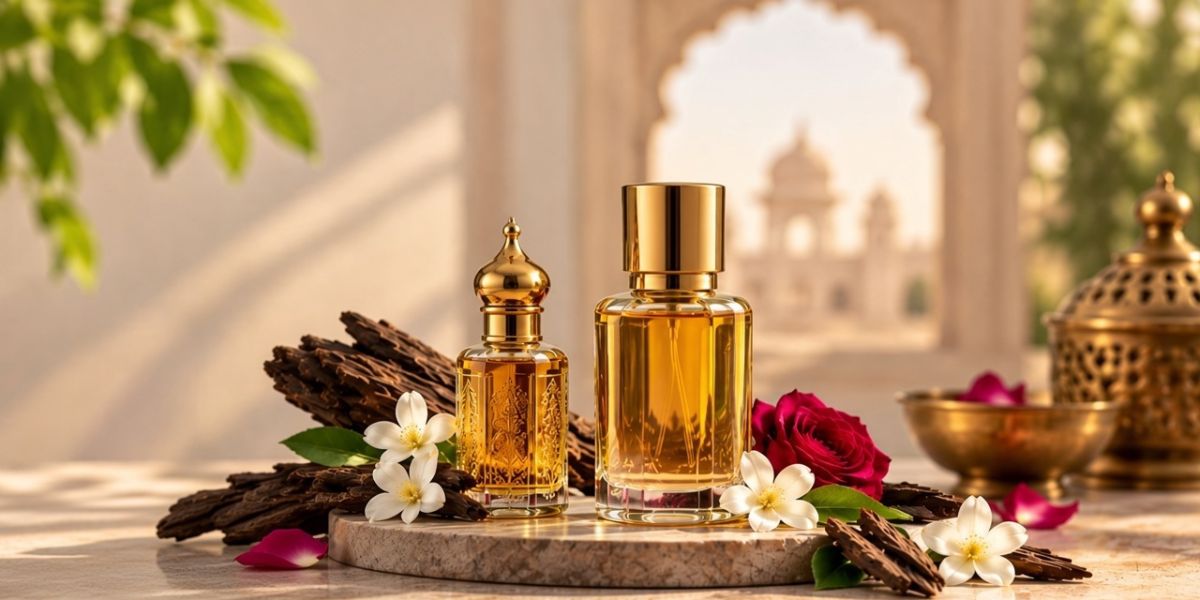
An attar, also written as ‘ittar’, is a traditional concentrated fragrance oil. It is made by distilling flowers, woods and resins and capturing the vapour in a base such as sandalwood oil. Instead of being sprayed, attar is dabbed on pulse points like the wrists and neck. Body warmth then lets the scent unfold slowly over hours.
What Are Perfume Oils?
Perfume oils are fragrance compositions made in an oil-based format. They can use natural materials, aroma chemicals or a mix of both. Modern perfume oils are often easier to create in volume than traditional attars. Not every perfume oil is technically an attar, since a true attar follows the traditional distillation method.
Why Are Attars and Perfume Oils Gaining Attention in the USA?
Future Market Insights values the global attar and perfume oils market at USD 764.7 million in 2026 and expects it to reach USD 1,449.0 million by 2036, a 6.6% CAGR. Numbers like that don’t appear out of nowhere.
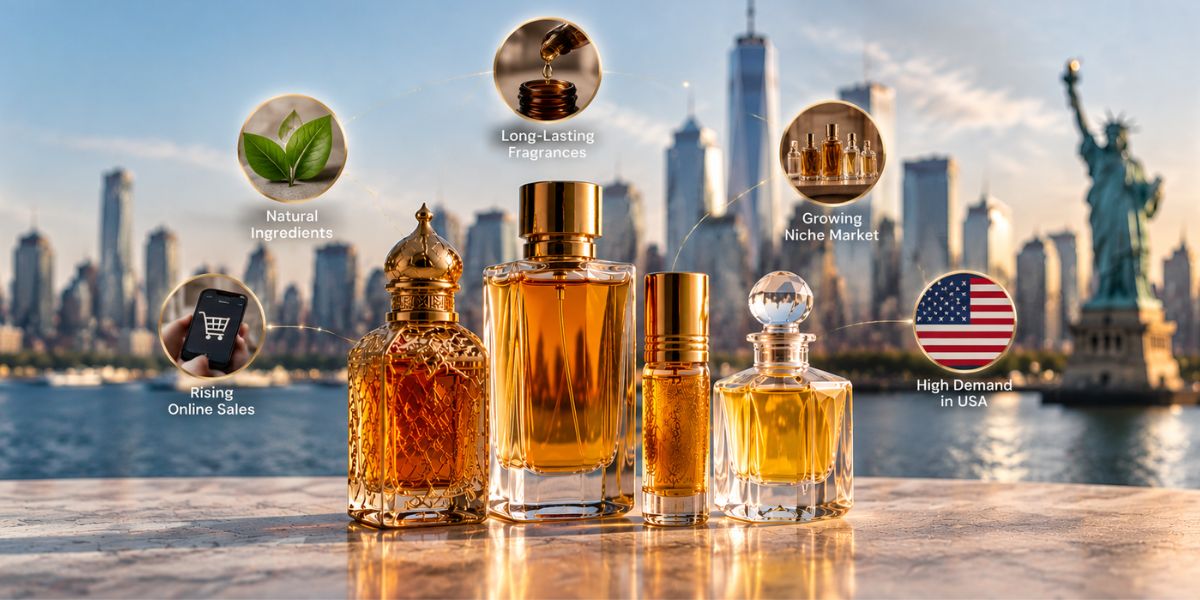
Here is what seems to be pulling shoppers in:
- Niche fragrances: People are tired of smelling like everyone else, so smaller and more unusual scents are winning attention.
- Concentrated formats: A little oil on the skin can last for hours, and shoppers notice that.
- Personalization: Wearing a scent that feels like yours matters more than following a trend.
- Alcohol-free choices: Some buyers simply prefer a softer, skin-close fragrance without the spray.
- Traditional and culturally inspired perfumery: Heritage scents come with a story, and shoppers like having one to share.
- Younger shoppers: Gen Z and millennials often discover fragrance online before they ever visit a store.
- Social media and fragrance communities: Reviews, hauls and scent talk spread new favorites quickly.
- Premium and luxury positioning: Rich oils and elegant packaging let brands charge for the experience.
Future Market Insights also cites DSM-Firmenich research showing 70% of respondents appreciate scents more than before. That gives shoppers a good reason to own more than one fragrance. Put it all together, and scent has become a way to express who you are, which is a mood that oil-based formats suit really well.
Popular Fragrance Directions for US Attar and Perfume Oil Brands
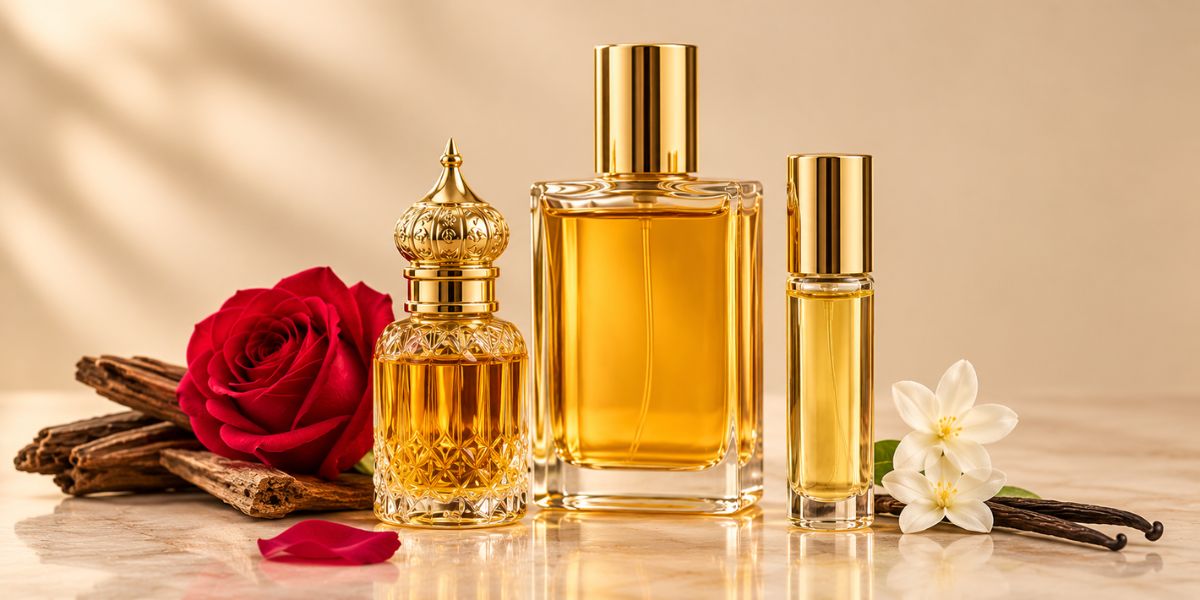
Brands have plenty of fragrance directions to explore. Oud and woody fragrances remain the classic headline. Sandalwood adds a creamy base, and amber and musk bring warmth. Rose and jasmine floral blends are ideal for gifting purposes. The vanilla and gourmand notes add a hint of sweetness, but the citrus and fresh notes keep it light. Fruity fragrances appeal to younger buyers.
Herbal and botanical-inspired scents give a natural story, and unisex compositions let one range serve everyone. Rose, sandalwood, oud, musk and jasmine are long-standing attar materials, so these directions feel authentic. Mixing two or three into one collection gives shoppers an easy way to explore.
Product Opportunities for Brands Exploring Attars and Perfume Oils
A strong brand rarely stops at one bottle. Roll-on perfume oils are convenient to carry, and traditional attar-style fragrances speak to heritage buyers. Unisex, oud-based and floral perfume oils cover the favourite directions. Luxury concentrated fragrance oils work well on luxury shelves, and smaller size fragrance oils for travelling reduce the cost of trying a different scent.
Layering gift collections are an easy way to offer various collections for the holidays, and they allow customers to create their own mix. Perfume oil collections are separate for men and women, which assists in targeting. Future Market Insights found that cream and balm formats will hold 30% of format demand in 2026, so solid options deserve a look too.
How Private Label Manufacturing Can Help Launch an Attar or Perfume Oil Brand?
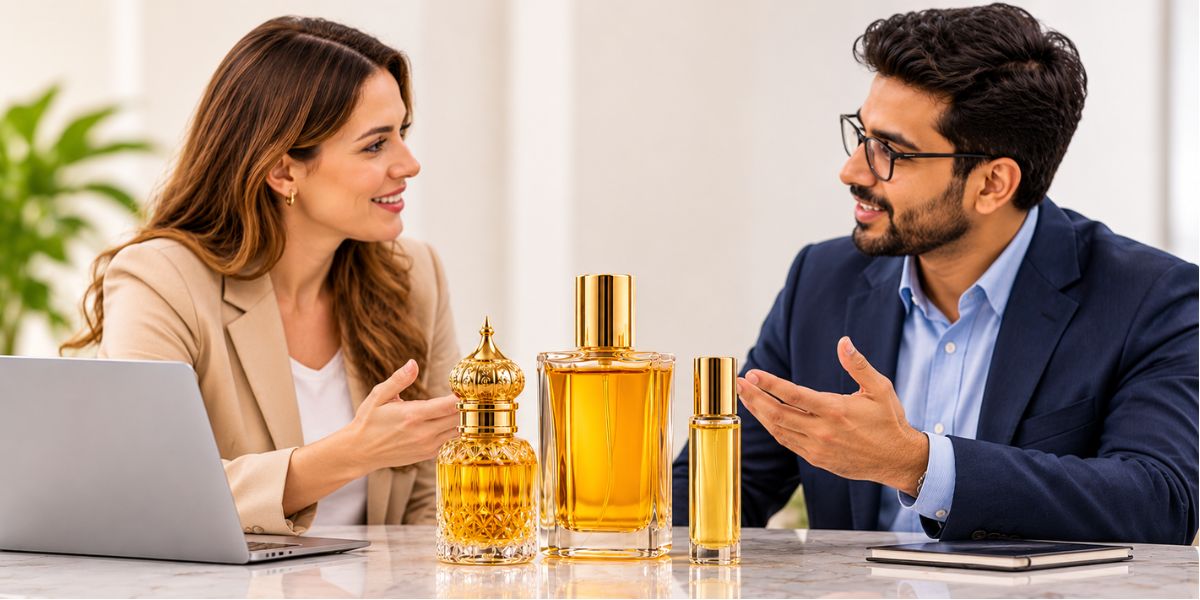
Private label attar projects follow a clear path.
- Select an Existing Fragrance or Develop a Custom Concept – Some brands start with a ready-made scent to save time. Others build something new from their own idea. Either way, this first choice sets the tone for the whole collection.
- Fragrance Direction and Target Consumer – Decide what the scent should feel like and who will wear it. A woody oud for evening buyers is a completely unique brief from a light floral for daily wear.
- Develop or Modify the Formula – The manufacturer builds a new formula or adjusts an existing one to fit your brief. Strength, base oil and note balance all get fine-tuned at this stage.
- Create Samples for Evaluation – Samples let you smell the scent on skin and see how it changes over a few hours. This phase is the easiest time to ask for tweaks.
- Testing and Stability Checks – Before anything goes into production, the oil is checked for stability and for how it behaves with its container. A scent that smells great in a vial can change on a shelf.
- Select Packaging – Choose a pack that suits the format and price point. Glass bottles, roll-ons and travel sizes each give a different feel.
- Apply Branding and Labeling – Your name, logo and label design go on the pack here. Clear labeling also helps the product meet the right requirements.
A brand can concentrate on the narrative and sales part of the process, while the manufacturer takes care of the technical aspects of each step. Each step builds on the last, so skipping one often causes trouble later. Testing at the sample stage is especially useful, since a scent that smells lovely in a vial can behave differently in a roll-on or after weeks on a shelf.
Why Fragrance Brands Need an Experienced Perfume Oil Manufacturer?
The best private label perfume maker keeps your fragrance safe from sample to shelf. Watch for quality of fragrance, formula development capability, ingredient compatibility checks and stability testing. Consistency between batches is as important as the ease of scaling the process from samples to bulk.
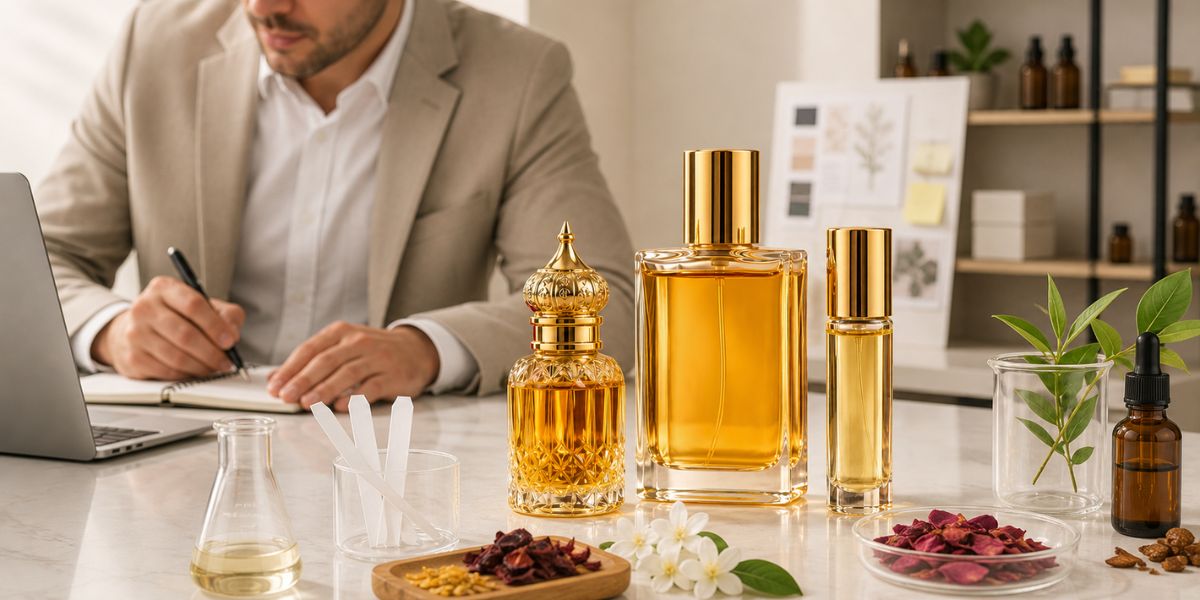
Packaging support and custom branding enhance the final product’s completeness, and regulatory and quality awareness ensures safe launches. When you’re looking into the different types of perfume manufacturers, inquire about the way they go about every one of these procedures. This smooth process is made possible by clear communication throughout.
Building a Private Label Attar and Perfume Oil Collection With Bo International
Bo International supports private-label and custom fragrance development, including fragrance oils and perfume products, with customized packaging and manufacturing services. Its website highlights stability-tested formulations and GMP, ISO and FDA-compliant manufacturing capabilities.
Product directions include woody perfume oils, fruity fragrance oils, women’s fragrance oils, oud-inspired fragrances, custom perfume oils and private-label perfumes. For brands comparing private label perfume manufacturing companies, this range simplifies early planning. Brands can start from an existing idea or build a custom concept from scratch, and move ahead at their own pace.
The Future of Attars and Perfume Oils in the US Market
The road ahead looks promising. Shoppers want niche and distinctive fragrances and more personal scent experiences, and oil-based and concentrated formats may keep growing. DTC, boutique, luxury and culturally inspired brands all have room to play. Attractive packaging and strong storytelling will matter more. Brands can stand out through unique scent combinations rather than competing only on price, and private label gives smaller teams a faster way to join in. That makes now a good moment to plan.
FAQs
Q1.What is the difference between attar and perfume oil?
Attar is a traditional oil made by distilling natural materials into a base like sandalwood oil. Perfume oil is a broader term for any oil-based fragrance, natural or modern. So every attar is a perfume oil, but not every perfume oil is an attar.
Q2.Are attars becoming popular in the USA?
There’s growing interest in more focused and niche scent formats, and in alcohol-free scents. Attar and perfume oils are promising formats to explore for the global market as expected to rise at a 6.6% compound annual growth rate (CAGR) for the forecast period of 2021–2036, as stated by Future Market Insights.
Q3.Can brands create private label attars?
Yes. Many private label perfume manufacturers USA brands search for can also handle attar-style oils, from scent selection and sampling to packaging. A brand can play off of an existing scent, or create a bespoke concept to fit their story.
Q4.What fragrance notes work well for perfume oils?
Oud, sandalwood, amber and musk are classic choices. Rose and jasmine suit floral blends, vanilla adds a gourmand touch, and citrus keeps things fresh. Many brands mix a few notes to create a signature oil that feels effortless to wear.
Q5.Can a manufacturer create a custom formula for perfume oil?
Yes. The perfect private label perfume company for your perfume brand will create a formula or alter an existing one to suit your brief, then sample and test it before production. Tell your target customer and your notes early, so that the initial samples are more aligned with your notes.
Q6.What packaging options are available for private label perfume oils?
Options include glass bottles, roll-ons, dropper bottles and travel sizes, plus boxes and gift sets. Custom labels and branding can be added to each. It is contingent upon the format, your price point and how customers will use the oil.