- 31/10/2026
- Rohit Mishra
Currently, Indian cosmetics firms face challenges from fluctuating US tariffs impacting India’s exports. Rising costs and sourcing uncertainties strain supply chains, especially for white and private label brands reliant on global sourcing, and manufacturing. Thus, transparency in sourcing is crucial.
What Are US Tariffs, and How Do They Affect the Cosmetics Industry?
US tariffs are creating havoc in the cosmetics and personal care industry, impacting consumer behavior, supply chains and costs. Higher tariffs raise the cost of production and companies have to decide whether to absorb those costs or raise prices. When problems occur in the supply chain and with sourcing, companies begin to question their dependence on foreign suppliers, especially in countries like China.
How to Import Cosmetics From India for a U.S. Brand?
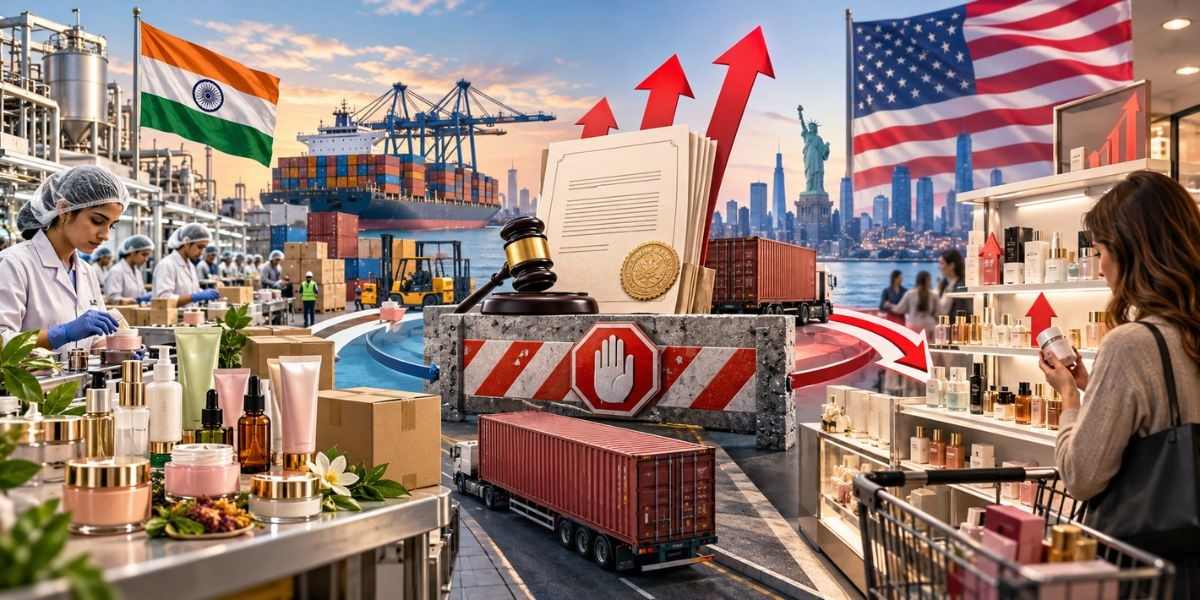
Importing cosmetics from India for a U.S. brand? Compliance with FDA regulations & MoCRA requirements is key. Demonstrate to the producers that they are using GMP standards, CDSCO licenses and they are not using animal testing. Find the HTS code and shipping terms . A licensed customs broker can help you clear entry with US Customs and Border Protection. Get the logistics in order.
Why are U.S. Imposed Tariffs on Cosmetic Products From India?
In light of the ongoing trade impasse, high import barriers in India, a large US trade deficit and India’s persistent purchases of Russian oil, the US imposed duties on various Indian commodities, including cosmetics, through Section 301 measures. Foreign supply chains are the target of the charges which aim to reduce their use.
Which Indian Cosmetics Products Could Be Affected: When Importing in the USA?
1. Finished Cosmetic Products
US tariffs have severely impacted finished Indian exports, including face creams, lotions, moisturisers, serums, shampoos, conditioners, hair care products, soaps, body washes and personal care products. However, the bilateral trade agreement framework greatly reduced reciprocal tensions. To keep prices competitive with US alternatives, brands must manage cost variations.

2. Essential Oils and Carrier Oils
Indian essential oils, including lavender, tea tree, peppermint and carrier oils, such as sweet almond, jojoba and coconut, may experience higher import costs due to the larger US tariff regimes. Because US beauty brands rely on imported raw ingredients, these tariffs significantly raise retail prices for end users.
3. Cosmetic Raw Materials and Ingredients
Botanical and herbal extracts, emollients, emulsifiers, humectants, and fragrance ingredients are vulnerable if classed as general non-exempt items. While several electronics and pharmaceutical APIs have received exemptions, raw chemical, and cosmetic formulation materials face higher supply chain inflation when sold to the US market.
4. Private-Label and Contract-Manufactured Products
Indian private-label skincare, haircare, and specialised formulations are highly susceptible to US import duties. Increased tariffs make ready-to-sell products, custom formulations, and white-label cosmetics less commercially viable for US beauty stores, requiring them to source from regional competitors instead.
Types of US Cosmetics Tariffs Applicable on Made-in-India Products
1. Basic Import Duties on Cosmetics
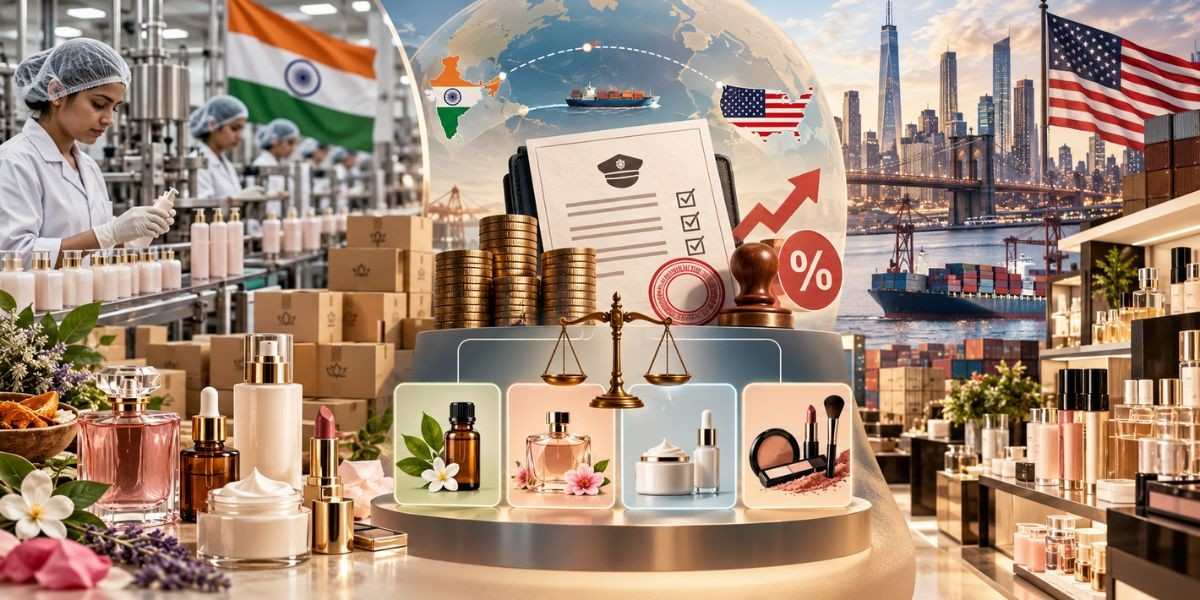
Basic Import Duties on Indian Cosmetics are the primary and baseline duties that the US government levies on cosmetics and skincare products imported from India. This tax does not only put money into the federal government , it also protects American cosmetics companies from competition from abroad.
2. Customs Duties on Cosmetic Ingredients
The US government levies import fees, which are called cosmetic ingredients customs duties, on raw materials imported from India. The purpose of these tariffs is to control international trade by increasing the landing cost of Indian made cosmetics and thus protect American industries.
3. Taxes and Other Import Charges
Taxes and other import charges are obligatory taxes levied by US Customs and Border Protection (CBP) on Indian cosmetics entering the US. This comprises customs tariffs based on the Harmonised Tariff Schedule (HTSUS) and processing costs, which apply only if the shipment value exceeds the $800 duty-free threshold.
4. Section 301 Tariffs Special Surcharges
Global investigations on forced labor standards (Section 301 Tariffs) have led to U.S. imports, including qualifying Indian cosmetics, being subject to a 10% ad valorem tariff. This tax was a trade penalty, which raised landed costs to ensure everyone was doing what they were supposed to do.
5. Anti-Dumping and Countervailing Duties
Anti-dumping duties are US levies imposed on Indian cosmetics imported below fair market value to protect the local market. Countervailing duties are levies that counteract unjustified Indian government subsidies (such as tax rebates). Together, they protect American cosmetics businesses by restoring fair market pricing.
6. Raw Material and Ingredient Tariffs
Raw Material and Ingredients Tariffs are import tariffs levied by the United States government on various base components, oils and chemical inputs exported from India. Instead of taxing the finished makeup product solely, these levies penalise the basic building elements used to make cosmetics.
Impact of US Tariffs on Cosmetic Final Product Prices
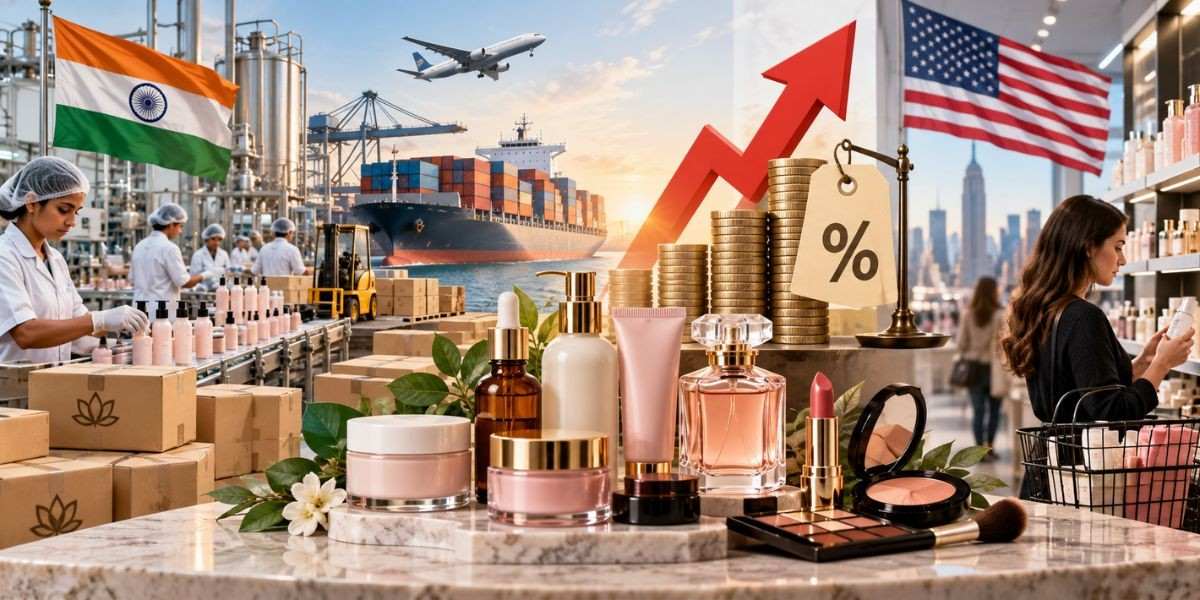
US tariffs on imports range from 10% to 145%, resulting in a 6% to 25% rise in final cosmetic retail pricing. For example, Brands’ efforts to pass on rising costs for materials such as aluminum containers, specialty plastic packaging and globally sourced ingredients are directly impacting beauty bags for budget-conscious consumers.
Future Outlook for US Tariffs on Indian Cosmetics
The future outlook for US tariffs on Indian cosmetics is determined by a stable baseline. Following the expiration of severe 50% penalty duties and emergency surcharges in early 2026, Indian cosmetics are now subject to ordinary Most-Favored-Nation (MFN) duties and a stable 10% Section 301 tariff, which is enforced in July 2026.
Conclusion
Tariff changes in the United States force Indian cosmetics makers and US brands to reconsider their sourcing, pricing, and supply chains. Businesses can manage costs and remain competitive by monitoring trade policy, ensuring regulatory compliance, and pursuing flexible manufacturing alliances.
FAQs
Q1 What are US tariffs on Indian cosmetics products?
Ans. The US government taxes and penalizes (Known as tariffs) imports of Indian cosmetics and personal care products, which causes price increases and eats into the profit margins of brands.
Q2 Do US tariffs apply to essential oils imported from India?
Ans. Tariffs imposed by the United States are applied to the essential oils imported from India. They are normally subject to a base Most Favoured Nation tariff rate plus any relevant surcharges.
Q3 Are Indian cosmetic raw materials subject to the same tariffs as finished cosmetics?
Ans. No, US tariffs distinguish between finished cosmetics and raw ingredients (such as chemicals or extracts), which are classed under separate HS codes and tax rates.
Q4 How do US tariffs affect Indian cosmetics exporters?
Ans. US tariffs on Ayurvedic and cosmetic brands have increased packaging and landing costs for India’s small and medium-sized enterprises (SMEs) forcing them to either raise prices or look for new international markets.
Q5 Who pays US import tariffs, the exporter or the importer?
Ans. Legally, the importer in the United States pays the import tariff directly to US Customs, and Border Protection but if the contract uses DDP Incoterms, the overseas exporter pays it.