- 05/11/2026
- Rohit Mishra
Sometimes when selling products such as perfumes, fragrance oils, and scented personal care products, you will need to provide an IFRA Certificate. Retailers and distributors often ask for this document to approve your products for sale. With an understanding of what an IFRA Certificate is and how it works, you will be able to provide documentation showing that your brand meets fragrance safety expectations.
What Is an IFRA Certificate?
The IFRA Certificate of Conformity shows whether a fragrance is compliant with any required IFRA Standards. It provides information showing how much fragrance can be used within products.
What Are IFRA Standards?
Standardised guidelines developed to help ensure the safe use of fragrance materials within consumer products. These are derived from scientific safety assessments completed by the Research Institute of Fragrance Materials (RIFM). There is a panel of Experts reviewing these.
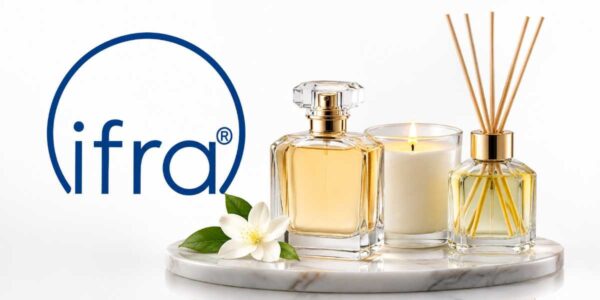
The Standards show what ingredients must be limited, what quantities can be used, and what ingredients must be completely banned. They also provide information on purity. Different levels of restriction will apply depending on the type of final product and how it will be used by consumers. Whilst they are not mandatory, they are required for IFRA Members.
How to Get an IFRA Certificate for Fragrances?
To obtain an IFRA Certificate, you will need to look at the formulation of your fragrance and follow the steps below:
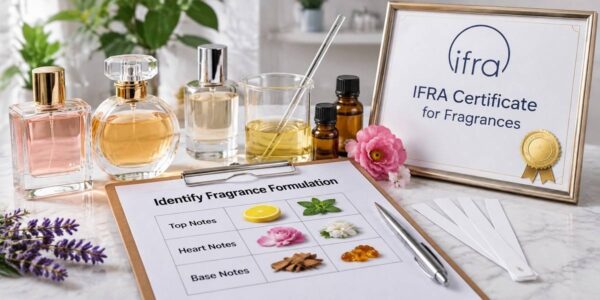
1. Identify the Fragrance Formulation
Identify what exact fragrance you have to certify. You will need to note down the Product Name, Reference Number, Fragrance Formulation, and anything available from your supplier. Every fragrance will need to be checked individually.
2. Identify the Intended Product Category
You will need to identify how the fragrance will be used. Perfumes, body lotion, soap, and scented candles will all have differing usage factors. It is important to know what category your fragrance falls under within IFRA to ensure you know what quantities you can use within products.
3. Review the Fragrance Ingredients
Identify what IFRA restrictions apply. This will include identifying any restricted/banned ingredients and calculating what quantities there are. Any naturally occurring restricted ingredients will need to be considered.
4. Check the Latest IFRA Amendments
Check the latest IFRA Standards and requirements for any amendments. If your Certificate is out of date, do not just reuse it.
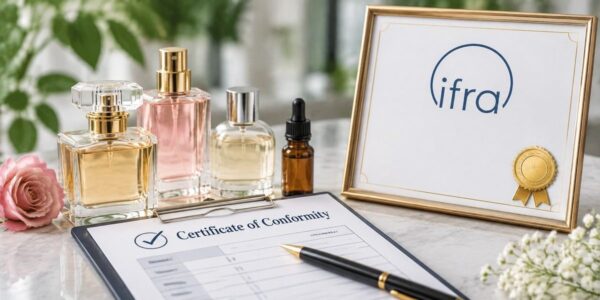
5. Prepare the Certificate of Conformity
Once you have identified that your fragrance is compliant, then the fragrance manufacturer/supplier will create the Certificate. Ensure the fragrance is clearly identified and what applications it can be used for.
6. Arrange Supporting Documents
Depending on the retailer’s requirements and your target market, you may require your Safety Data Sheet (SDS), Fragrance Allergens Declaration and some product-specific documents. Please note IFRA does not issue individual Certificates. The Fragrance Supplier usually creates the Certificate of Conformity, but you can use a third-party expert to help.
Which Products Require an IFRA Certificate?
Depending on what fragranced product you are using, retailers may ask for IFRA documents. This is common for perfumes and body sprays:
1. Perfumes and Body Sprays
The fragrances used in perfumes and body sprays will need to be within the correct usage limits. An IFRA Certificate can be requested by retailers to ensure the fragrances within their product are appropriate.
2. Fragrance Oils
Fragrance oils are used in many consumer products such as perfumes, soaps and home fragrances. Manufacturers may need to provide IFRA documentation to show usage limits for the different categories.
3. Essential Oil-Based Fragrance Blends
Essential oils contain natural fragrance components, some of which will have IFRA restrictions. As they are used within fragrances, consideration will need to be given to the composition. Raw essential oils usually will not be provided with standard IFRA Certificates.
4. Soaps and Shower Gels
Soaps and shower gels often contain a fragrance; however, as they are rinse-off products, they must comply with the IFRA requirements for rinse-off products. If you are supplying these products to retailers, they may request to see the relevant IFRA documents.
5. Lotions and Creams
As the fragrance will remain on the skin following application, you will need to take more care with your choice of fragrance. You will need to check what the appropriate usage rate is for your product type.
6. Candles and Home Fragrance Products
Fragrance oils are a big part of scented candles, reed diffusers and other home fragrance products. When choosing a fragrance oil to use, you should ensure that it complies with the relevant IFRA requirements. Retailers may request documentation to back up your new product.
Can Brands Choose Third-Party Manufacturers for IFRA-Certified Products?
Yes. Brands do not have to have their own manufacturing to supply fragranced products. Brands can use a third-party manufacturer to create the products. Before finalising your agreement with the manufacturer, it would be best to ask what certificate they have and if it covers the fragrance you are using. If there are any issues to be reviewed, a regulatory consultant can help you understand the formulation.
Conclusion
An IFRA Certificate is highly important for businesses working with fragrances. It provides retailers with more knowledge about the fragrance ingredients and the correct usage rates. Brands should ensure they have up-to-date certificates and that they have the correct documentation.
FAQ’s
Q1: Is an IFRA-certified fragrance safe?
Ans. An IFRA Certificate means that within the fragrance blend, the product complies with the relevant IFRA Standards for its intended use. However, this does not mean that the finished product is fully safe, and other product safety assessments will still need to be done.
Q2: What is IFRA Category 4?
Ans. This category covers fine fragrances applied to the skin, for example Eau de Toilette, perfumes, colognes and solid perfumes. Certain aftershaves and fragrance accessories also fall into this category.
Q3: How can I check whether a fragrance oil is IFRA compliant?
Ans. Ask the fragrance supplier for a Certificate of Conformity. Ensure that you check the category, usage limits, formulation, and correct IFRA amendment.
Q4: Do essential oils require an IFRA Certificate?
Ans. Raw essential oils usually won’t be provided with a standard IFRA Certificate. However, they will contain natural restricted components that will need to be taken into consideration when checking fragrance blends.